15 Things to Do in Ghent
The paid hits (worth booking)
1 Gravensteen Castle
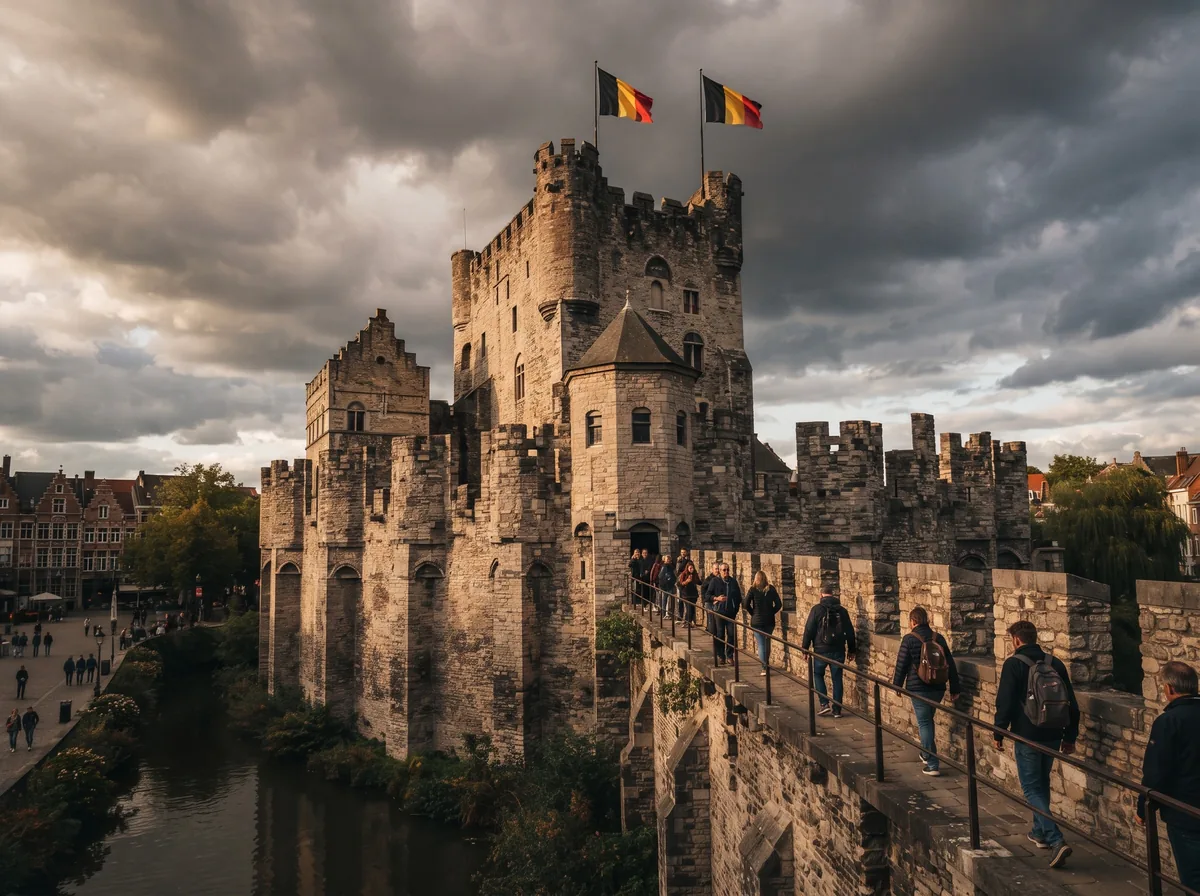
The castle of the Counts dominates Ghent’s skyline: a genuine 12th-century Romanesque fortress with intact ramparts, now offering an audio guide in five languages. Allow 90 minutes to 2 hours. You climb to the battlements, tour the dungeon-level exhibits, and see the full medieval centre from the ramparts — a vantage photographers do not miss. Entry EUR 13 adult, timeslot booking via historischehuizen.stad.gent. Open daily 10:00–18:00 (last entry 16:40).
2 Canal cruise
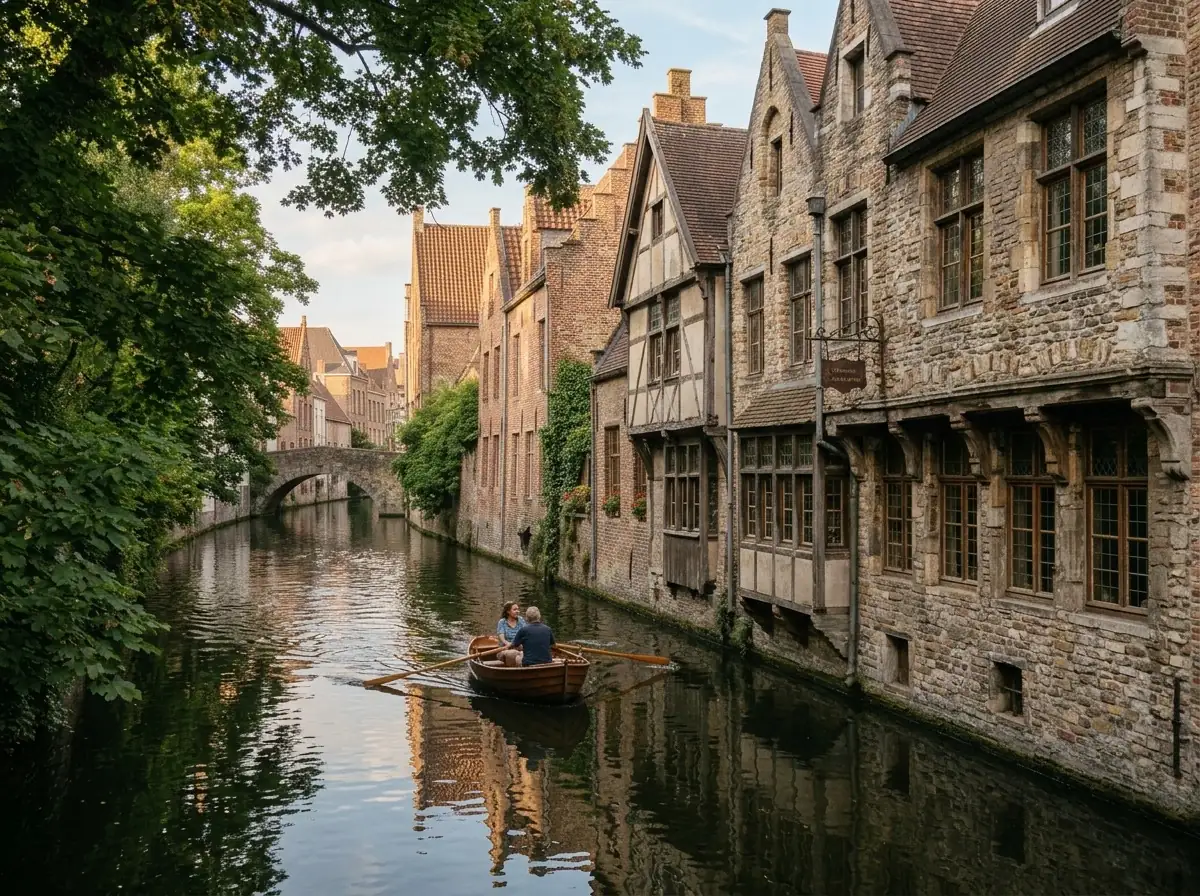
The single most efficient hour in Ghent: you sit in a boat, the guide narrates, and you see the core from water — Graslei guild houses, St Bavo silhouette, Belfry, medieval bridges. Boats depart year-round from the Graslei dock every 30–45 minutes. From EUR 13, around 50 minutes. No booking needed; arrive 10 minutes early. If you book one thing, book this; it orients you and saves an hour of walking.
3 St Bavo’s Cathedral & Altarpiece
St Bavo is two experiences: the nave is free to enter, a Gothic interior (1400s onward) with light and height. The Altarpiece—Jan van Eyck’s Adoration of the Mystic Lamb (1432)—sits behind a glass screen and costs EUR 13 extra. The painting is vast, intricate, and historically irreplaceable; budget 30 minutes. The Cathedral sits on Sint-Baafskathedraal, a 10-minute walk north from the centre.
4 Belfry of Ghent
A 95-metre tower anchoring the skyline since 1300, with a working bell carillon that chimes every quarter hour. The interior is compact: 364 steps to the top, no lift. Entry EUR 13. The view spans Flanders in clear weather — rooftops, farmland, church spires. Count 45 minutes inside, longer if crowds bottleneck the spiral stairs. The Belfry exterior and plaza are free to photograph day and night.
The free hits (do these first)
5 Graslei & Korenlei
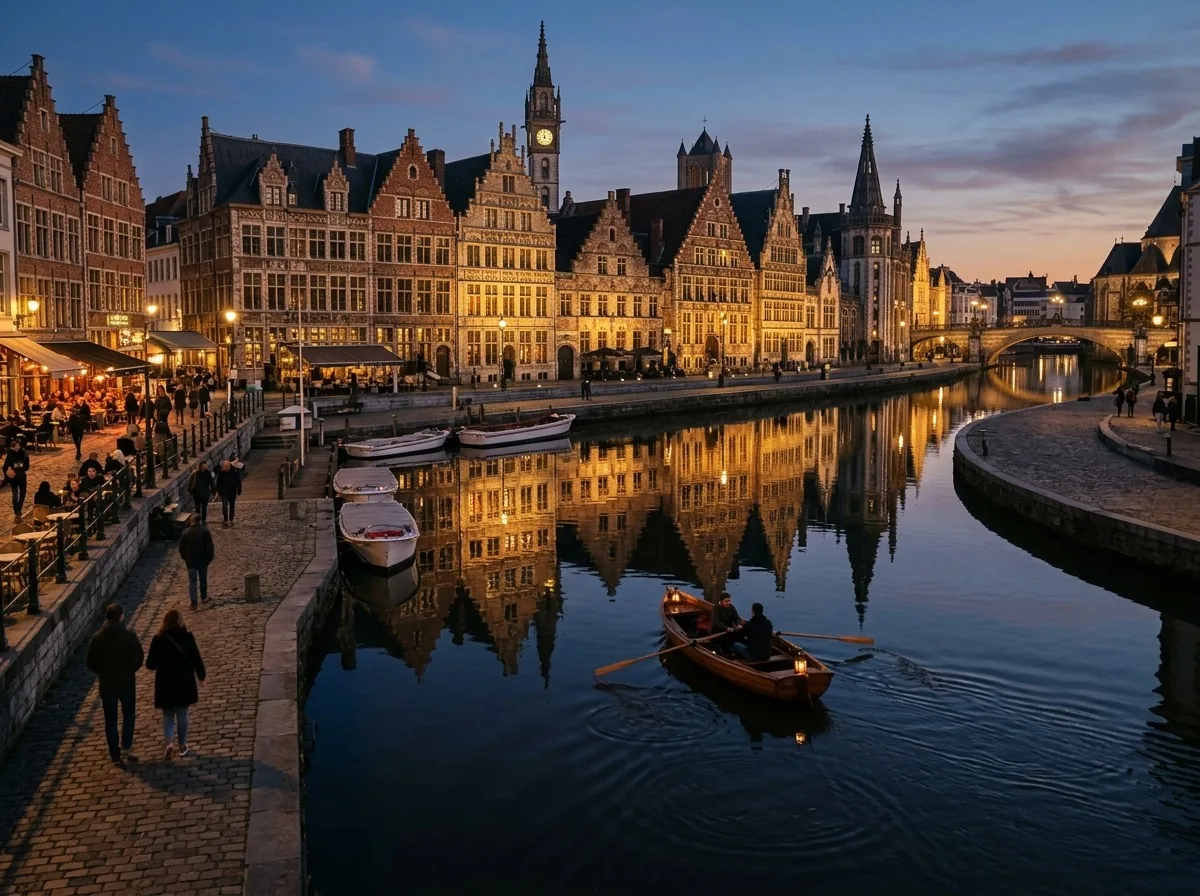
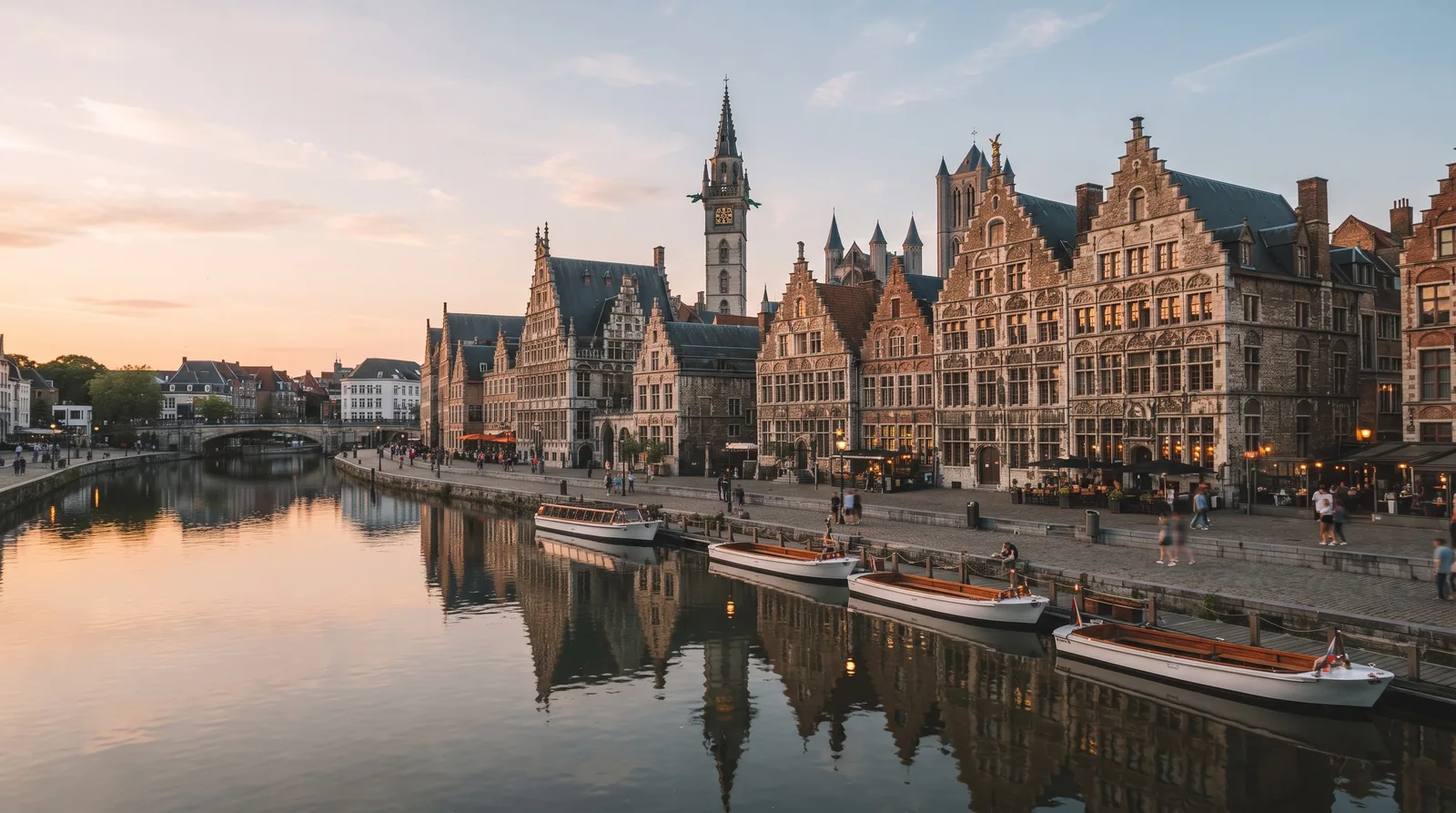
Twin quays facing the water: Graslei (grain dock) on the west, Korenlei (corn dock) on the east, separated by the Grasbrug bridge. Guild houses line both sides, dating 1400s–1700s, their narrow ‘jowl’ fronts stacked on medieval cellars. This is the most-photographed angle in Ghent, especially at dusk when light hits the facades and reflections dance on water. The quays are free; restaurants and cafés line the Graslei, and buying a drink lets you claim a table for an hour.
6 Patershol
A labyrinth of winding cobbled lanes, mostly 17th-century, named after a Beguin convent that once stood here. No major sights inside; the point is to wander, find courtyards, peek through gates, duck into a small café. The Church of St Peter stands at the north edge. Allow 30–45 minutes, longer if you eat. This is where locals lead friends, not where tour buses go. It sits north of the centre, reachable by crossing Sint-Michielsbrug.
7 St Michael’s Bridge
A 19th-century neoclassical bridge that frames the three main sights in one unobstructed vista: Gravensteen left, St Bavo centre, Belfry right, all reflected in the Leie river below. Photographers position themselves here at golden hour (17:30–18:30 depending on season). The bridge itself is free; no photos required. A 5-minute walk south of the centre.
8 STAM
The city museum, in a converted 14th-century Benedictine abbey. Exhibits span Ghent’s medieval trade guilds, religious art, industrial past, and street-level social history. Allow 2 hours. Entry EUR 12. Free entry every first Thursday of the month. The building itself — cloisters, vaulted rooms — is architectural evidence. Location: Sint-Veerleplein.
9 Vrijdagmarkt
Friday Market, a medieval plaza on the east side, named for the market that still happens there Fridays 06:00–13:00. Vegetables, flowers, cheap clothes, crowds. Open-air, lively, no entry fee. The plaza is ringed by guild houses and bars; even when the market is not running, it remains a pleasant square for a coffee.
10 Werregarenstraat
Graffiti Alley, a narrow lane in the south part of town where street artists are permitted to paint, so murals cover every surface. The style ranges from political to abstract to caricature. Allow 15 minutes to walk the length and photograph. Free. Best visited during the day for light. It shifts slightly month to month as new pieces appear.
11 MSK & SMAK
Two art museums housed in adjacent buildings: MSK (Museum of Fine Arts) covers European painting and sculpture from the 15th century onward; SMAK (Contemporary Museum) shows 20th–21st century work. Entry EUR 12 each, EUR 20 for both. Skill: MSK rewards 1–2 hours, SMAK 1 hour. Location: Citadelpark, a 10-minute walk west of the centre.
12 Gruut brewery
A functional brewery in the western suburbs, reviving a medieval recipe: grain, herbs, no hops. The tap room is open daily 11:00–00:00, serving Gruut beers (5.5% ABV, herbal, complex) at EUR 5–7 per glass. Tours with tasting run twice daily, EUR 18 per person. Thursdays are packed; weekday mornings quietest. Reachable by bike (15 min) or tram.
13 Gentse Feesten
A 10-day July festival (July 10–14 annually, dates may vary). Open-air stages, food stalls, boat parties on canals, live music 22:00–06:00 most nights. Attendance peaks around 2 million over the week; accommodation books out 6 months ahead. Many events are free; some stages and parties charge. July accommodation is most expensive. Skip if you dislike crowds; come if you want Flanders’ signature party.
14 Local food & specialties
Ghent is Europe’s vegan capital and a beer culture hub. Waterzooi (vegetable stew, cream, carrots) is the signature dish; fries (thick, double-fried) cost EUR 3–4 and are essential. Cuberdon (pyramid candy, fruit liqueur, “neus” in Flemish) is a souvenir. Tierenteyn mustard, hand-ground since 1885, pairs with everything. Gruut beer has no hops. Chocolate shops cluster near the Belfry. See the food guide for where to try each.
15 Day trips: Bruges & Antwerp
Bruges is 30 minutes by train (EUR 6 return, multiple per hour). A postcard-perfect medieval town; do it as a day trip or overnight. Antwerp (40 min, EUR 8) is bigger, grittier, known for fashion and streetwear. Both are on the line from Gent-Sint-Pieters station. Worth a full day if you have 3+ days in Ghent; Bruges especially for anyone skipping Ghent’s interior museums.
How to sequence them
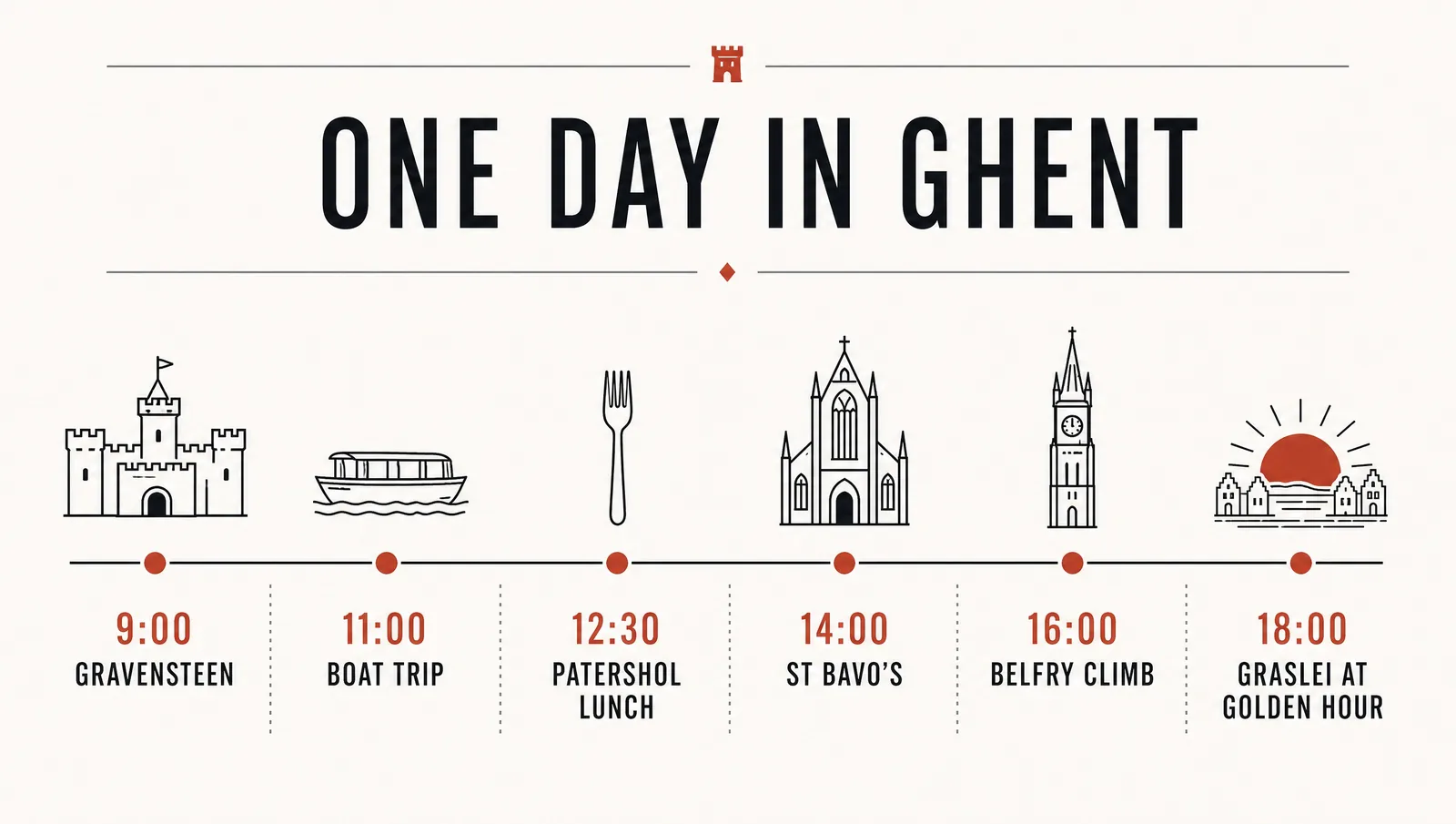
Ghent doesn’t demand a checklist. But a good order saves time. A first day that works, on foot:
Morning (9:00–11:30): Start at Gravensteen (aim for 09:00 entry to beat crowds). Climb the ramparts for an overview. 90 minutes inside.
Midday (11:30–12:30): Walk to the Graslei docks; catch a 12:00 or 12:30 canal boat. 50 minutes on water, most sights framed.
Lunch (12:30–14:00): Arrive Graslei side; walk 10 minutes north into Patershol. Eat at a small restaurant (waterzooi, fries). 90 minutes.
Afternoon (14:00–16:00): Walk south to St Bavo (5 min walk from Patershol). See the nave (free, 15 min). Pay for Altarpiece (EUR 13, 30 min).
Late afternoon (16:00–17:00): Climb the Belfry (EUR 13, 45 min, tight stairs). Rest the legs if needed.
Evening (17:30–18:30): Walk to St Michael’s Bridge for sunset light, photograph the three sights, golden hour drinks on Graslei.
One day: canal, castle, Bavo, Belfry, Graslei sunset.
Two days: above plus Patershol deeper, museums, brewery tour.
CityCard breaks even after 3 paid sights.
Start at Gravensteen 9am. Boat at 11:30 is most efficient. Patershol for proper lunch, not tourist trap. See the Altarpiece (it deserves the EUR 13). Climb the Belfry. Golden hour on Graslei. Walk everywhere; the city is 1.5 km.
Frequently asked questions
Top things to do?
Gravensteen, boat, St Bavo, Belfry, Graslei, Patershol, museums.
Best known for?
Medieval core, canals, Gentse Feesten, beer, chocolate.
Can do in one day?
Yes: Gravensteen, boat, lunch, St Bavo, Belfry, Graslei sunset.
CityCard worth it?
EUR 42–48 covers museums, tram, boat, bike.
Free to do?
Quays, bridges, Patershol, St Bavo nave, graffiti, parks, street food.