Day trips from Ghent: Bruges, Brussels, Antwerp, coast (2026)
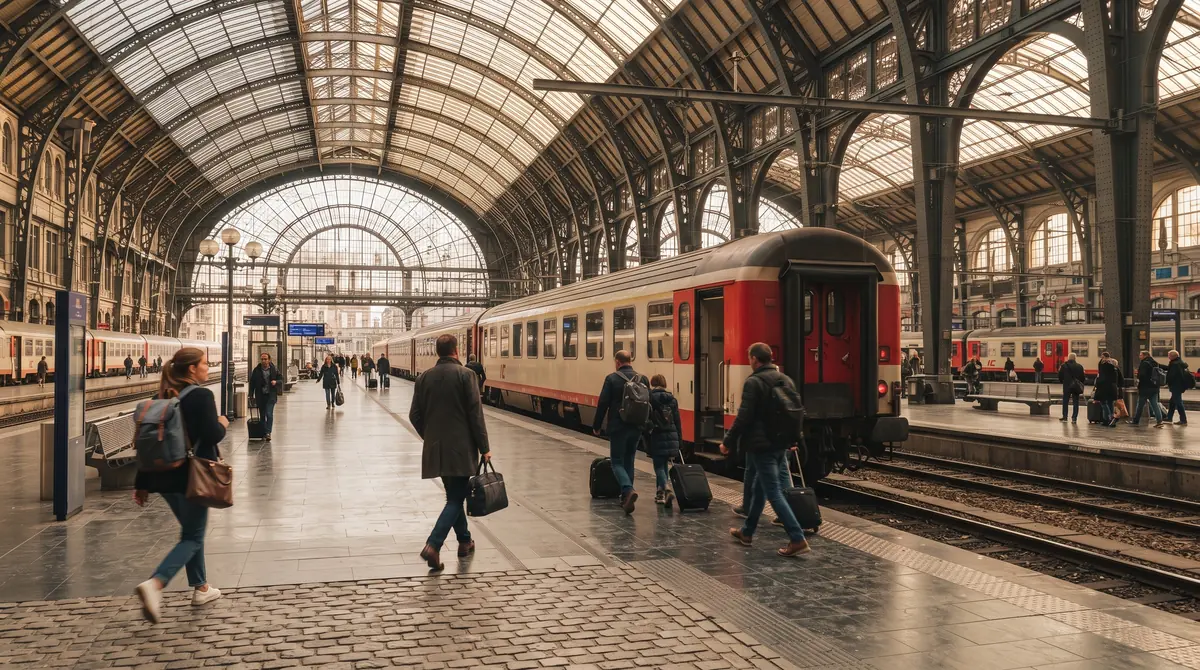
Four kinds of day trips
Four main patterns: nearby train cities (Bruges, Brussels, Antwerp), a coastal tram ride to the beach, or a guided coach tour combining multiple cities. Which depends on how much time you have, what you want to see, and whether you prefer structure (coach) or flexibility (train).
From Brussels: Bruges & Ghent day tour
Depart Brussels 9:00 a.m., visit Bruges (2 h), Ghent (2 h), return 6:00 p.m. Includes guide & coach. Lunch is on your own. Runs spring to autumn. Best for first-timers and groups.
Check ticketsBruges day trip (guided from Ghent)
Private guide meets you at Ghent station, takes the train to Bruges, walks the city (highlights or custom route), and returns by evening. Customise duration & pace.
Check ticketsBruges, Brussels, or Antwerp by regional train
Frequent trains, flexible timing. Bruges 26 min (EUR 6), Brussels 35 min (EUR 11), Antwerp 40 min (EUR 13). Buy a day ticket, explore at your own pace, return whenever.
Check ticketsAntwerp: port, museums, street art
Younger vibe than Bruges, world-class museums (Rubens, Mayer Van den Bergh), diamond district, street art. Often overlooked; worth a full day.
Check ticketsPick the coach tour if it’s your first time in Bruges and you want a guide. Take the train if you want to linger in one city or visit twice.
Bruges: 26 minutes by train (EUR 6 one-way)
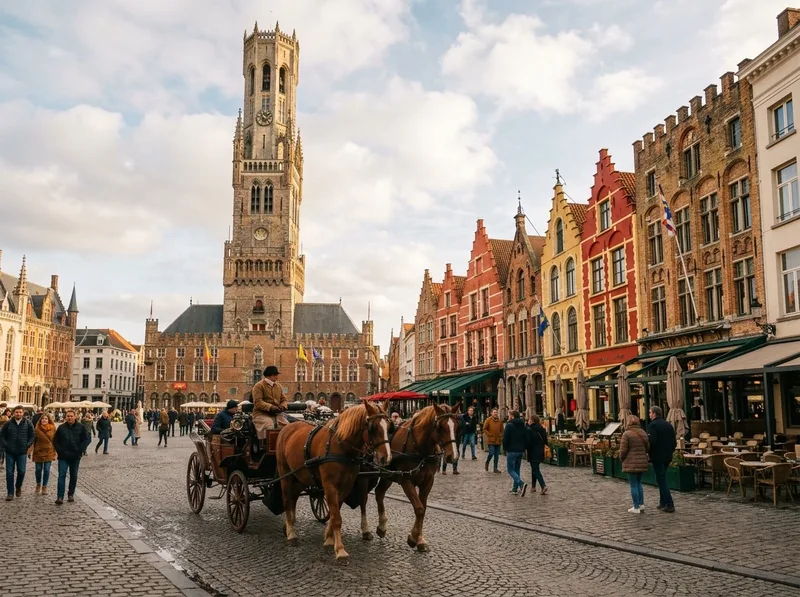
Bruges is often called more “touristy” than Ghent, but that’s because it’s smaller and the medieval centre is more compact (thus busier per square metre). The reality: Bruges has the same medieval charm as Ghent, plus a few extra postcards—more water, more swans, fewer locals. Key sights: Market Square (the Belfry, surrounded by guild houses), Sint-Salvator Cathedral, the Begijnhof (convent), and several museums. The chocolate shops and lace boutiques are everywhere; ignore them unless you love crowds.
Train: Ghent Sint-Pieters to Bruges takes 26 minutes (frequent: every 15–30 min). Single ticket: EUR 6. The train station is outside the old town; walk 15 minutes or take a local bus 2 minutes.
Best for: Photography, first-time visitors, a half-day from Ghent (arrive 09:00, depart 14:00, back by 14:30). Avoid: July–August peak tourist season and school holidays; April–May or September is nicer. Budget: EUR 6 train + EUR 10–15 lunch + EUR 2–8 museum entries = EUR 20–30 per person.
Read more: Ghent vs Bruges: which to visit (fact-checked comparison).
Brussels: 32–40 minutes by train (EUR 11 one-way)
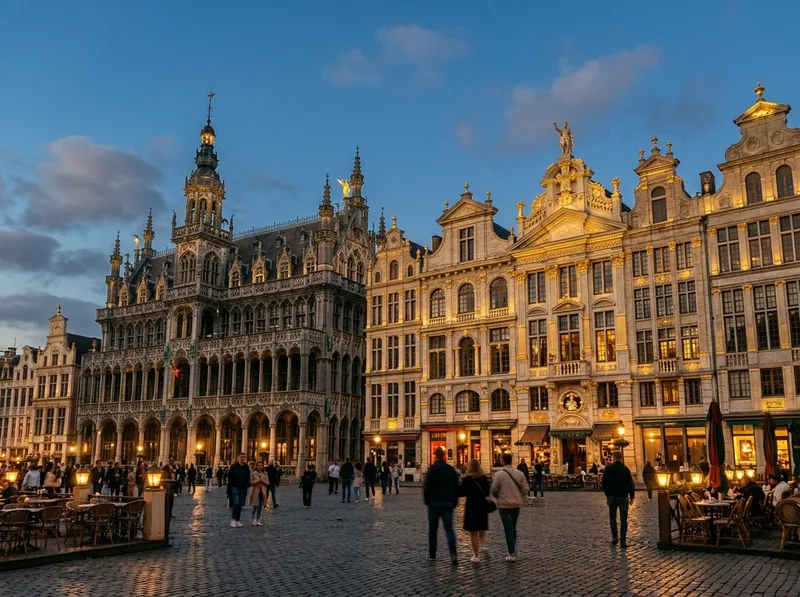
Brussels is Belgium’s capital: bigger, busier, more museums, more nightlife. The Grand Place is one of Europe’s most photogenic squares (UNESCO World Heritage). Nearby: the Belgian Parliament, the Atomium (kitsch sci-fi monument), street-art murals, and some of Europe’s best fries (frituur stands everywhere). The city is walkable but sprawling; pick one neighbourhood (the centre, the EU quarter, the art deco area) and spend the day there.
Train: Ghent Sint-Pieters to Brussels Midi (south station) or Central (city-centre station). Journey time 32–40 minutes depending on the route. Frequent (every 15–30 min). Single ticket: EUR 11. Central station is closest to major sights.
Best for: Grand architecture, museums, beer culture, a full day. Budget: EUR 11 train (return) + EUR 15 lunch + EUR 10 museums + EUR 20 other = EUR 60 per person. Best season: May (spring light) or September (crowds thin, weather mild).
Antwerp: 40 minutes by train (EUR 13 one-way)
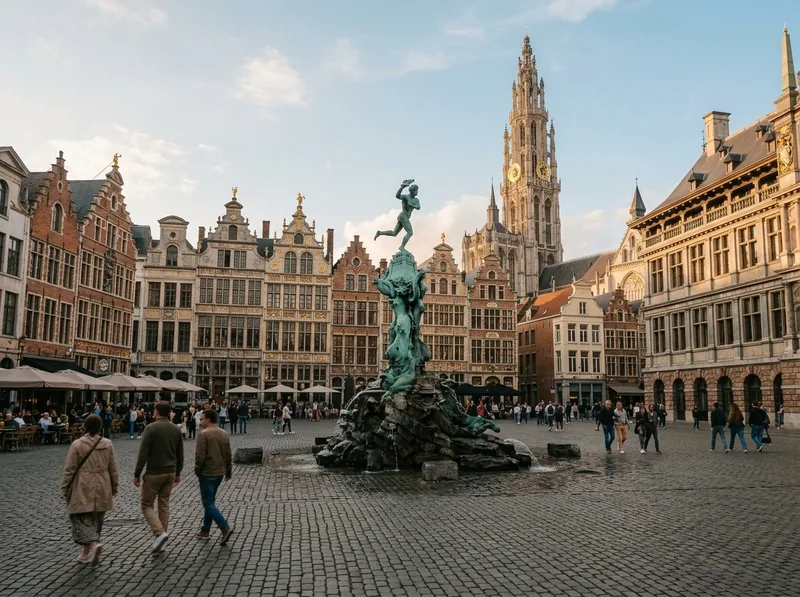
Antwerp often gets overlooked, but it’s worth a full day. It’s younger than Bruges (vibe is art, fashion, street culture, not medieval cuteness). Sights: the Rubens House (baroque mansion), the Mayer Van den Bergh Museum (Old Masters), Sint-Andrieskerk (Gothic church), the Central Station (Belle Epoque architecture), and a diamond district. The waterfront is modern; the old town is narrow lanes and small plazas. Street art and murals are everywhere.
Train: Ghent Sint-Pieters to Antwerp Central takes 40 minutes (every 30 min). Single ticket: EUR 13. The station itself is worth seeing: a 1905 Belle Epoque masterpiece with a soaring glass dome.
Best for: Art lovers, fashion enthusiasts, people tired of medieval. Quieter than: Bruges and Brussels combined. Budget: EUR 13 train + EUR 12 lunch + EUR 12 museums = EUR 37+ per person.
The Belgian coast: 1 hour by tram to Ostend
For a beach day or a change of pace, take the scenic tram ride from Ghent to Ostend or De Panne (the coastal resorts). The tram runs through polders (flat farmland) and small villages; it’s a 45–70 minute journey. EUR 7 one-way. Ostend has a seafront promenade, fish restaurants, a vintage amusement arcade, and wide sandy beaches. Winter: quieter and moody. Summer: busy, but lovely.
The tram leaves from Ghent Sint-Pieters station. Buy tickets at the ticket office or on board. Most Ghent day-trippers skip the coast; it’s more for a beach-break vibe than sightseeing.
Coach tour: Bruges & Ghent from Brussels (EUR 55)
If you’re based in Brussels for several days, a coach day tour can visit both Bruges and Ghent in one day. Depart Brussels 9:00 a.m., Bruges 9:30–11:30 a.m. (2 hours), lunch break, Ghent 13:30–16:00 (2.5 hours), return Brussels 18:00. Includes coach and guide. Food is on your own. Runs April to October. Best for: first-time visitors, groups, people without train confidence. Trade-off: you’re on a schedule and can’t linger at favourite spots.
DIY day trip: the maths
To Bruges (half-day, 3–4 hours): EUR 6 train return + EUR 10 lunch + EUR 5 café = EUR 21 per person.
To Brussels (full day, 8 hours): EUR 11 train return + EUR 15 lunch + EUR 10 museums + EUR 10 snacks/transport = EUR 46 per person.
To Antwerp (full day, 8 hours): EUR 13 train return + EUR 12 lunch + EUR 12 museum + EUR 8 snacks = EUR 45 per person.
Coach tour (Bruges + Ghent from Brussels, full day): EUR 55 per person (includes coach, guide, entries).
DIY train trips are cheaper if you skip museums. Coach tours are better value if you want guidance and hotel pickup.
Train tips and logistics
Tickets and passes
Single tickets are cheapest for a one-time trip. Buy at the ticket office (longer queues) or at the yellow ticket kiosks (faster). A return ticket is usually 10–15% cheaper than two singles. If visiting multiple cities, consider a one-day Ghent CityCard (EUR 42 / 48 h, EUR 48 / 72 h): covers trains to zones 1–6 (Bruges, Brussels, Antwerp), plus museum entries and boat trips.
Train schedules
All destinations are reachable from Ghent Sint-Pieters (the main station). Schedules are frequent: Bruges (every 15–30 min), Brussels (every 15–30 min), Antwerp (every 30 min). Trains run 06:00–23:00 mostly. Overnight trains are rare. Download the Belgian Railways app (SNCB / Infrabel) for real-time schedules and mobile tickets.
Luggage and bikes
Luggage: store at Ghent station (EUR 5–10 per item, EUR 30/day locker) if you’re continuing to another city. Bikes: Belgian trains allow bikes in a designated compartment (no extra fee if you have a day ticket). Handy if exploring the coast or countryside.
When to visit each city
Spring (April–May): Ideal. Light is soft, flowers bloom, crowds are moderate, weather is 15–18°C. All cities are lovely; go to Bruges or Antwerp.
Summer (June–August): Peak season. Weather is 20–25°C, but Bruges gets crushed with tourists. Brussels and Antwerp are better if you want a quieter city. Ghent is still walkable, but book accommodations early.
Autumn (September–October): Excellent. Weather is 15–20°C, leaves change, crowds drop. Ideal for photography and wandering. Slightly rainy.
Winter (November–March): Cold (5–10°C), grey, and wet. Christmas markets in Brussels and Bruges (November–December) are worth the weather. Most other times: skip winter for these day trips; the light is flat and the tourist spots are crowded anyway (locals staying indoors).
Dos and don’ts for day tripping
Do
- Buy a one-way ticket first, then a return after exploring. Train schedules change, and you might want flexibility.
- Eat lunch in each city, not on the train. Train food is expensive and poor.
- Download the SNCB app (Belgian Railways) for real-time schedules and to avoid ticket-office queues.
- Visit Bruges in the early morning (07:00–09:00) or late afternoon (16:00+) to avoid the crowd-hour crush at 10:00–15:00.
- Use the CityCard if visiting 2+ attractions or taking multiple train trips; it pays for itself.
Don’t
- Don’t try to see all three cities (Bruges, Brussels, Antwerp) in one day; pick one and go deep.
- Don’t book a coach tour if you want flexibility; the schedule is tight and the pace is rushed.
- Don’t visit Bruges in July–August unless you love crowds. It’s beautiful but mobbed.
- Don’t skip lunch. Trains are slow and hotels want time; eating is half the trip.
- Don’t assume you need a car. Belgian trains are fast, frequent, and cheap; buses are slower. Stay on trains.
Combining with the one-day Ghent itinerary
Day-tripping makes sense on a 2+ day Ghent trip. On a 1-day visit, stay in Ghent: the one-day itinerary fits 5 major sights without rushing. On 2 days, Day 1 is Ghent (itinerary above). Day 2: train to Bruges (morning) or Brussels (full day). Two days in Ghent includes day-trip options. Or compare Ghent vs Bruges, Ghent vs Brussels, and how many days in Ghent.
Did you know? Five day-trip facts
- Bruges, Ghent, and Antwerp were the three richest cities in Europe during the 1400s (medieval textile trade). Their architecture reflects that wealth; you’re walking through centuries of Flemish prosperity.
- The Belgian coast was a major World War I and World War II battlefield. Ostend was heavily bombed; the modern seafront is a rebuild. The tram runs on a route that was once a defensive dike.
- Brussels’ Grand Place was rebuilt after a 1695 French bombardment destroyed it. The guild halls were reconstructed in the 1700s and are now among Europe’s finest baroque facades.
- Antwerp is the diamond capital of the world (70% of the world’s rough diamonds are traded there). The diamond district is a walking tour in itself; many shops offer polished stone sales.
- Belgian Railways (SNCB) runs one of Europe’s most punctual train systems. Delays over 10 minutes are rare. The network is so efficient that many Belgians commute daily from small towns to Brussels or Antwerp for work.
Frequently asked questions
Can I do a day trip to Bruges and Brussels on the same day?
Technically yes (Bruges 26 min, Brussels +45 min from Bruges = 1.5 hours total travel). But you’d spend 2 hours commuting and only 2–3 hours in each city—rushed and exhausting. Pick one city and go deep.
What’s the cheapest day trip from Ghent?
Bruges (EUR 6 train return + EUR 10 food = EUR 16). Brussels is EUR 11 train + EUR 10 food = EUR 21. Both are cheaper than staying in Ghent if you eat cheaply. Skip paid museums if budget is tight.
Should I buy a CityCard if I’m day-tripping?
Only if you’re visiting 2+ museums AND taking 2+ train trips. Single-city, single-museum day trips: skip it. Multi-city or museum-heavy: yes, it pays for itself.
Is Bruges worth the train ride if I’m only in Ghent 1 day?
No. Do the one-day Ghent itinerary instead. Bruges takes 2 hours just to travel + see the sights. Ghent is bigger and better; Bruges is just a postcard version of the same medieval vibe.
Which city is best for non-touristy experiences?
Antwerp. It’s younger, grittier, less overrun than Bruges. Street art, fashion, indie cafes, less fudge. Brussels is touristy but grand. Bruges is pure postcard.