The complete Ghent guide (2026)
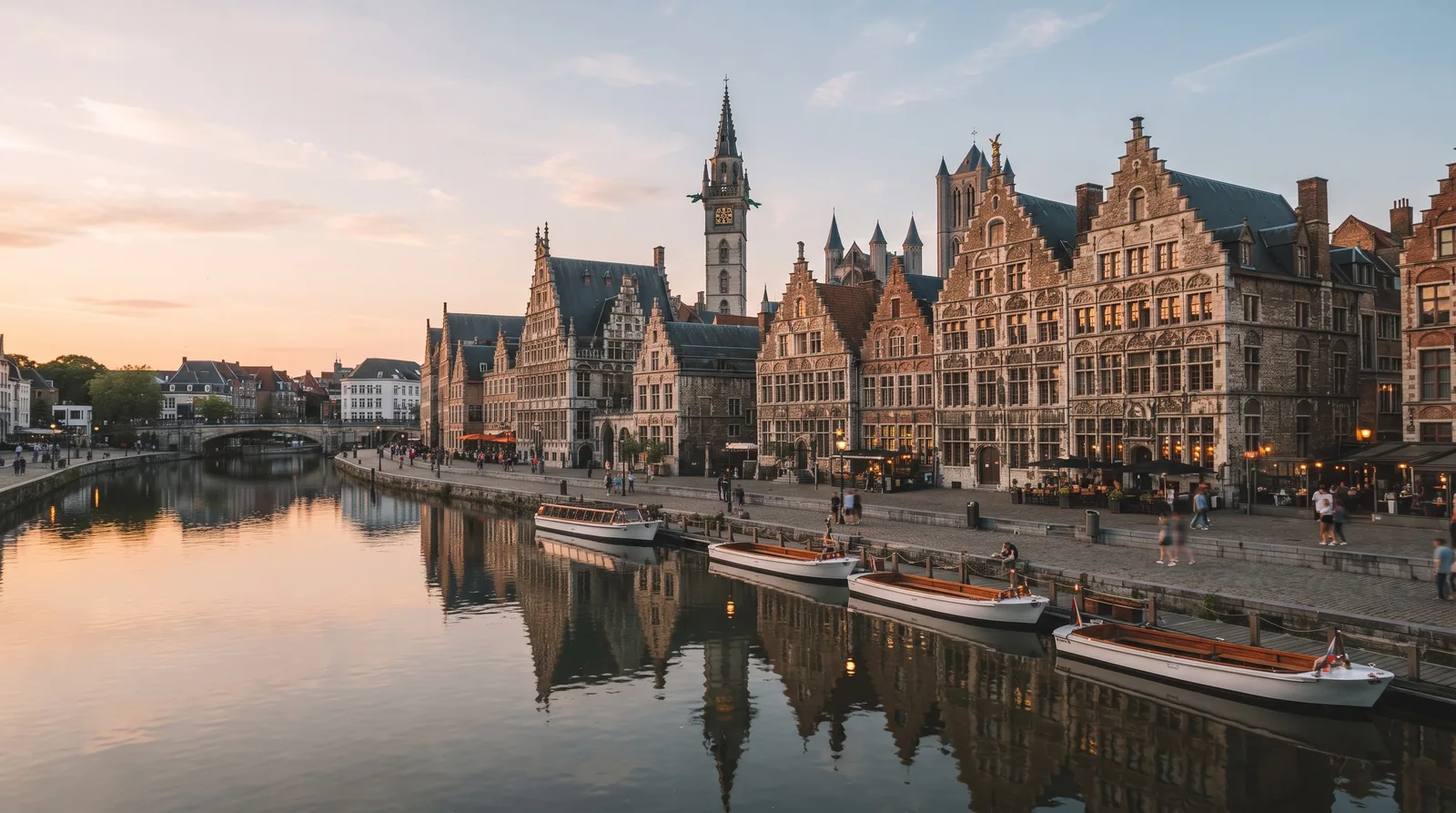
Ghent is a working Flemish city with a medieval core you can walk end to end in about twenty minutes — castle, cathedral and quays all inside one loop. It gets a fraction of the crowds its neighbours draw, and the evenings belong to students rather than tour groups. Start with what to see, check real costs, then follow the one-day plan or stretch it to two days.
I’m a walking guide born in Ghent, living in Patershol for the past eight years. What I know: Ghent is not Bruges, though visitors always compare. It’s older (founded 900 AD), grittier, less Instagram-polished, and that’s exactly why it’s worth the trip. The city fits into a 2 km loop. The real Ghent reveals itself at dusk on the Graslei, in the medieval cafes of Patershol, and over a plate of waterzooi with locals who don’t expect photographs.
Arriving in Ghent: the practical first steps
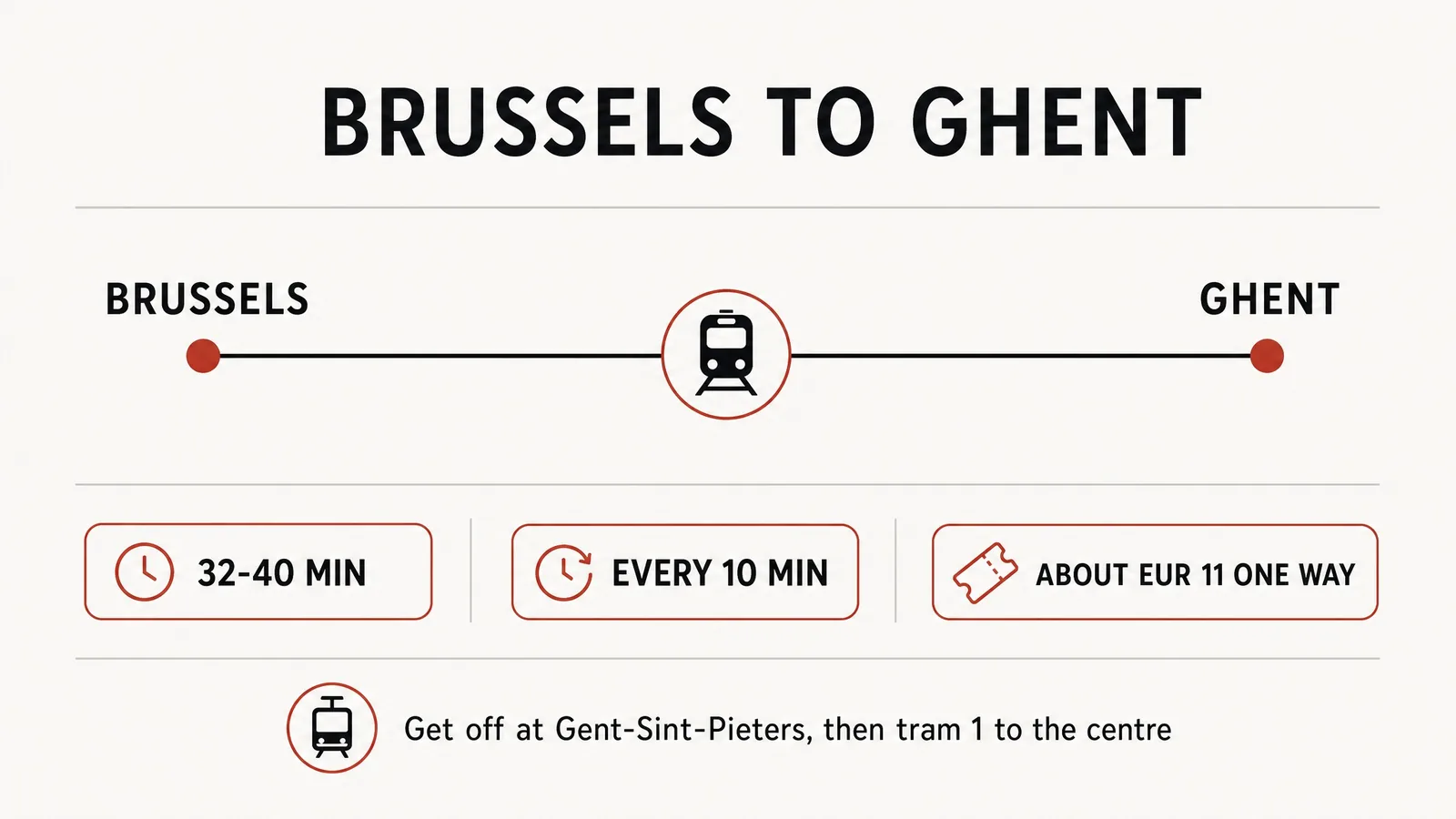
Most visitors arrive by train at Gent Sint-Pieters, a 15-minute walk south of the medieval core (or a 10-minute tram ride via line 1). The station is orderly and easy. Follow the signs to Tram 1 or head north on Sint-Pietersnieuwstraat; either way, you’ll reach the Gravensteen or Belfry within 20 minutes on foot. Walking from the station is actually pleasant — you pass quiet residential streets and cross the Citadelpark before arriving at the core.
If arriving from Brussels, the IC train takes 32–40 minutes and costs around EUR 11 one way (EUR 20 return). Trains run every 8–12 minutes throughout the day. Book on belgiantrain.be for saver fares (sometimes EUR 7–9). If you’re flying into Brussels Airport, take the airport train to Brussels Central (15 min), then the IC to Ghent. Total journey ~1 hour, total cost ~EUR 20.
Why Ghent feels smaller than Brussels but more alive
Ghent was a medieval port city — Gent means “confluence” — built where two rivers meet. The Citadelpark now covers the old fortifications, and the canals loop through the historic core. From Gravensteen to the Belfry is a 15-minute walk. From the Graslei to Patershol, another 10 minutes. Three massive towers (Belfry, Gravensteen, St Bavo’s) define the skyline and function as compass points. This compactness means you see the whole city without transport — no metro, no trams required for the core.
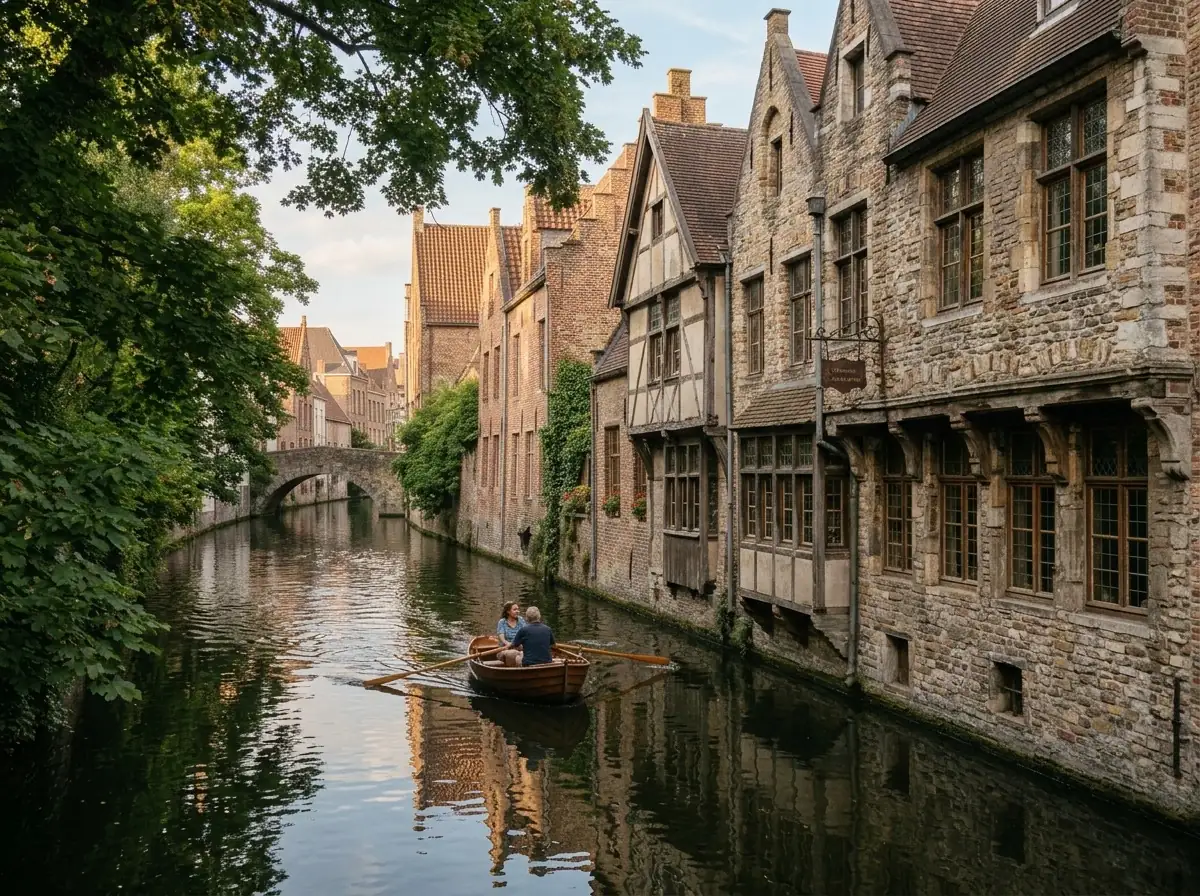
But size isn’t the point. Ghent is alive because it’s a university town — 40,000 students in a population of 250,000. That means cafes stay open late, streets fill with bikes and young people, and you’ll find proper bars and restaurants that don’t cater to cruise tours. The canal-side on the Graslei is medieval, but the energy is contemporary. Walk past Gravensteen at 19:00 on a Thursday and you’ll hear student laughter echoing from the lanes. This liveliness is what separates Ghent from Bruges.
The core walkable loop: from Gravensteen to the Graslei
The loop in six pins: the four monuments, Patershol for food and the station. Full version on the Ghent map.
The heart of Ghent is a 45-minute loop that connects four essential locations. Start at Gravensteen, the Count’s Castle (1180), which sits at the old harbour. It’s a fortress, not a palace — built to protect merchant wealth, not to house nobility. Entry EUR 13 (includes audio guide); book via historischehuizen.stad.gent to skip queues. Climb to the ramparts and the city reveals its geometry: three towers, water on all sides, bridges radiating outward. Spend 45 minutes here on the walls; it’s the only vantage point that shows Ghent as a unified medieval city.
Walk north to the Graslei, a row of guild halls facing the water. This is not a museum but a lived-in quay where the light changes minute by minute. In summer, sit here at 18:30 and watch the stonework saturate with gold. In winter, the water reflects grey sky and the scale of the buildings becomes monumental. The 50-minute canal cruise departs from Korenlei pier (EUR 13, every 15 min). Ride it, especially at 16:00–17:00 when the sun hits the water at the right angle.
Walk south to St Bavo’s Cathedral, the spiritual heart of the city. Entry EUR 6. The treasure: the Ghent Altarpiece by Jan van Eyck (1432), called the “Adoration of the Mystic Lamb.” It’s a 12-panel oil painting of extraordinary detail — each square inch reveals a new landscape, procession, or symbol. Spend 30 minutes on this single painting. The rest of the cathedral (nave, crypt) takes 20 min.
Exit south to the Belfry (Belfort, 1320), the second tower. It rang the hours, sounded fire alarms, and housed the city treasury in the basement. Entry EUR 8. Climb 366 steps to the carillon chamber, where 52 bells hang and play. The climb is narrow and steep; 80-year-olds do it. Views stretch to the countryside on clear days. Allow 50 min total for less-fit climbers.
Patershol: the neighbourhood where locals eat
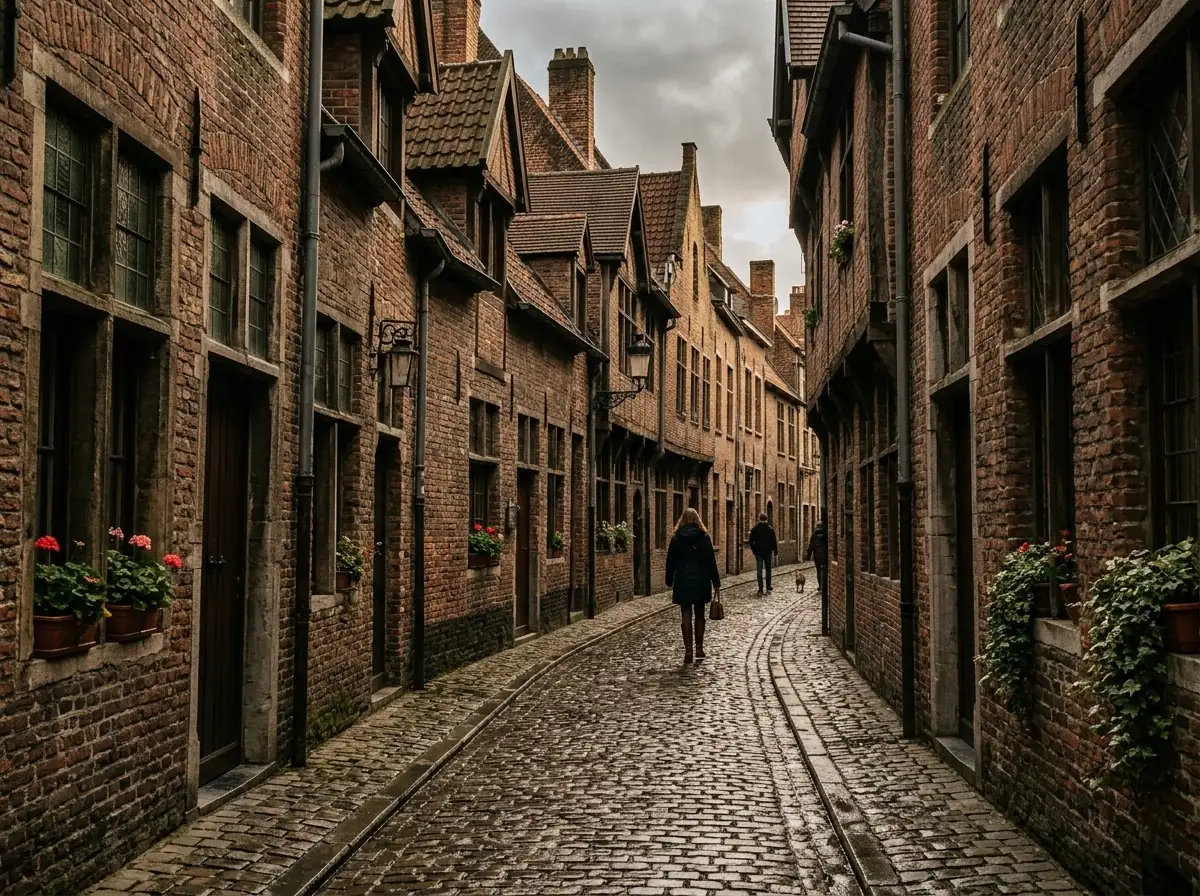
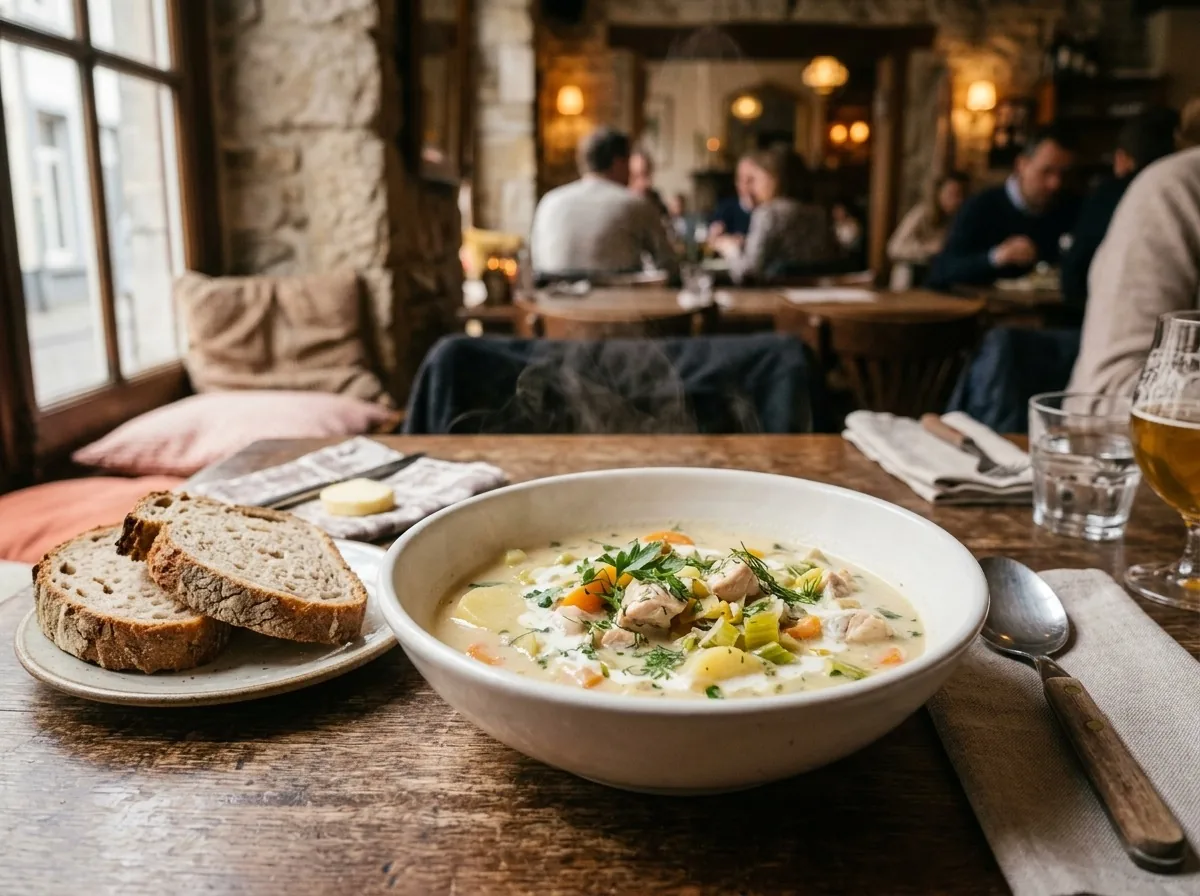
Behind St Bavo’s lies Patershol, a warren of medieval alleyways. The names — Graffiti Street, Blind Alley, Butchers’ Lane — mark what used to happen there. It’s now the heart of Ghent’s restaurant scene. Waterzooi (a Flemish vegetable stew with chicken or beef) is the signature dish. Find a small corner restaurant at 12:30 and order it; most places charge EUR 14–18 for a plate large enough to share. Pair it with Trappist beer (Westvleteren 12 if they have it, Chimay otherwise) and you’ve had the meal that defines the city.
The neighbourhood is walkable but can feel claustrophobic in peak hours. Go mid-afternoon (14:00–16:00) when it’s quiet and the light is soft. Return for dinner after 18:00 when restaurants fill with locals. A proper three-course meal in Patershol runs EUR 30–45; a waterzooi-and-beer combo is EUR 18–25 and more authentic.
First-afternoon walk: the short version
If you have only an afternoon (arriving 13:00, departing 18:00), here’s what works: walk directly north from Sint-Pieters station via Sint-Pietersnieuwstraat to reach the Graslei by 13:30. Sit with a beer for 30 minutes, orienting yourself (this view is what Ghent is). Walk east to St Bavo’s Cathedral (5 min), look at the Van Eyck altarpiece (20 min). Walk south to Gravensteen (5 min), climb the ramparts (30 min). Walk west to the Belfry (5 min), climb if energy permits (30 min). Return to Graslei by 17:30 for golden hour (60 min). Exit south to catch the 18:50 train back to Brussels. That’s the city in 5 hours.
Sit with a beer for 30 minutes, orienting yourself. This view is what Ghent is.Bram De Waele, on the Graslei
Spending your first full day: the hour-by-hour plan
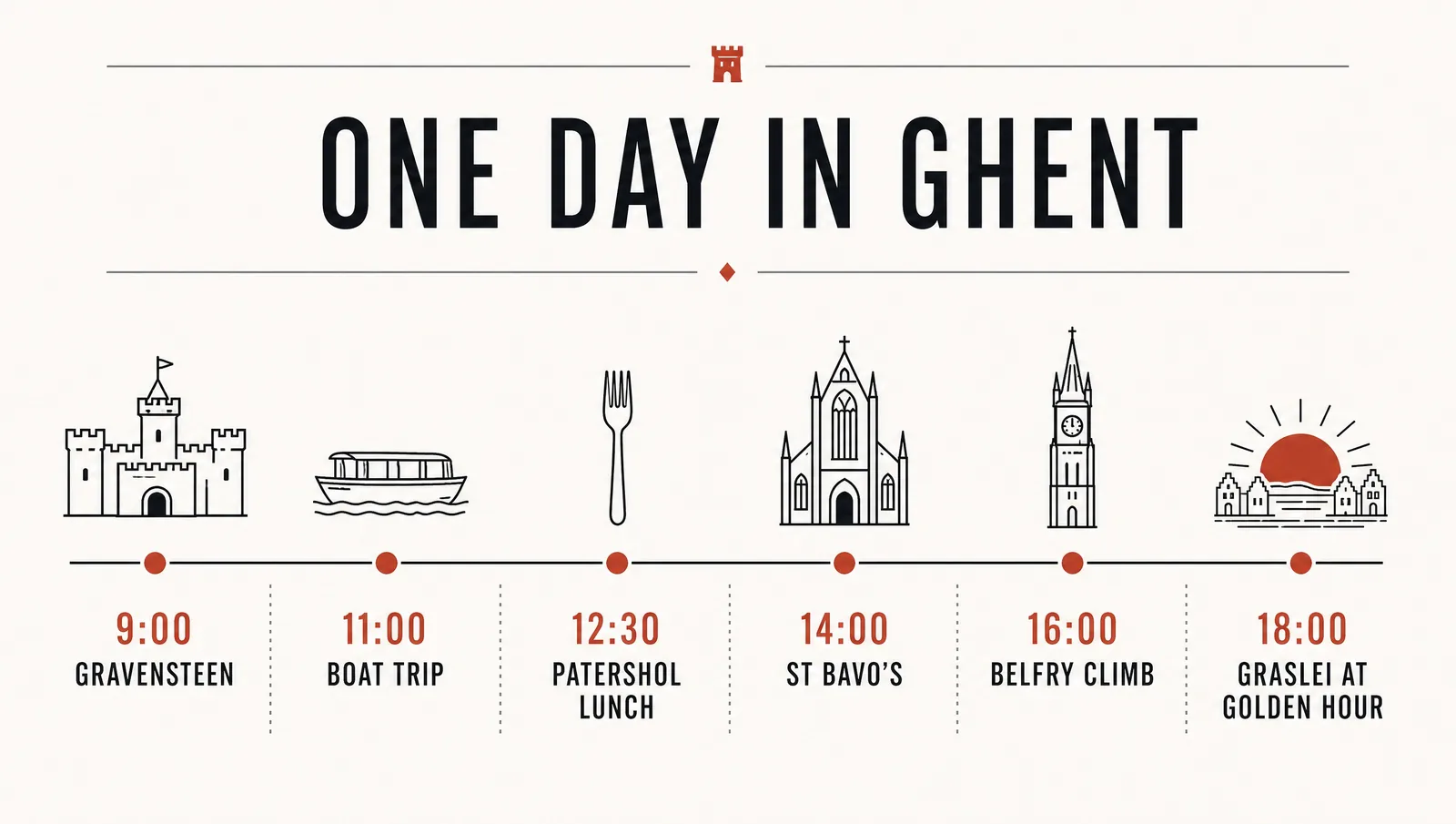
A full day in Ghent works perfectly: start at Gravensteen (09:00–10:30), taking the ramparts slowly to understand the layout. Canal cruise (11:00–12:00) from Korenlei, which shows you the city from the water. Waterzooi lunch in Patershol (12:30–14:00), eaten slowly. St Bavo’s Cathedral (14:00–15:00), spending time with Van Eyck. Belfry climb (15:30–16:30), for the views. Graslei at golden hour (17:00–18:30), watching the light change. Dinner in Patershol at 19:00. That’s a full, unhurried day without feeling rushed.
What a first-timer typically gets wrong
| Ghent | Bruges | Brussels | |
|---|---|---|---|
| Feel | University city; lived-in medieval core | Postcard-perfect; tour-group heavy | Capital sprawl; museums and the EU quarter |
| Crowds | Moderate; thins after 17:00 | 10,000+ day-trippers at peak | Diluted across 20 km |
| Best for | 1–2 nights, food and atmosphere | A half-day photo walk | Big museums and transit connections |
| From Brussels | 32–40 min by IC train | About 1 hour | — |
Longer version with itineraries: Ghent or Bruges and Ghent or Brussels.
They spend too much time in the main squares (Sint-Veerleplein, Graffiti Street) expecting restaurants to be good. They’re tourist traps charging EUR 25–35 for mediocre pasta. Instead, walk two streets back into the quiet lanes of Patershol or explore Sint-Jacobs and Bijloke, where locals actually spend time and eat well for EUR 14–20.
They skip the Gravensteen ramparts, thinking a EUR 13 castle entrance is overpriced. But the 360-degree view from the top is the only place you truly see Ghent as a unified medieval city. It costs the same as a coffee and pastry. Worth every euro.
They try to compare Ghent to Bruges or Brussels instead of letting it be its own thing. Bruges is postcard-perfect but drowning in tour groups (peak 10,000+ per day). Brussels is the capital, spread across 20 km of bureaucratic sprawl. Ghent is compact, medieval, alive with students and locals, still affordable, and actually inhabited by people who live here year-round.
The practical truth about food and money
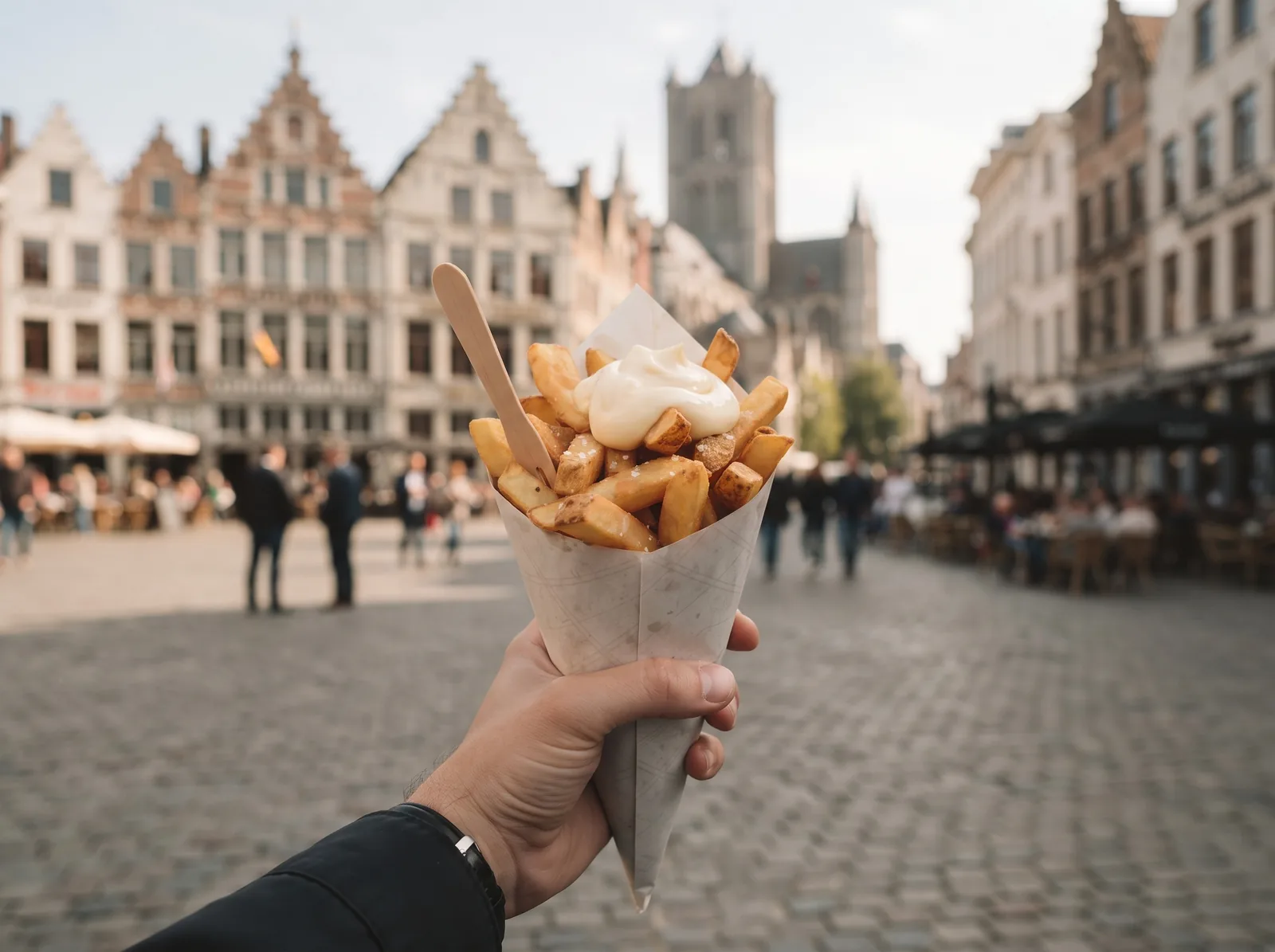
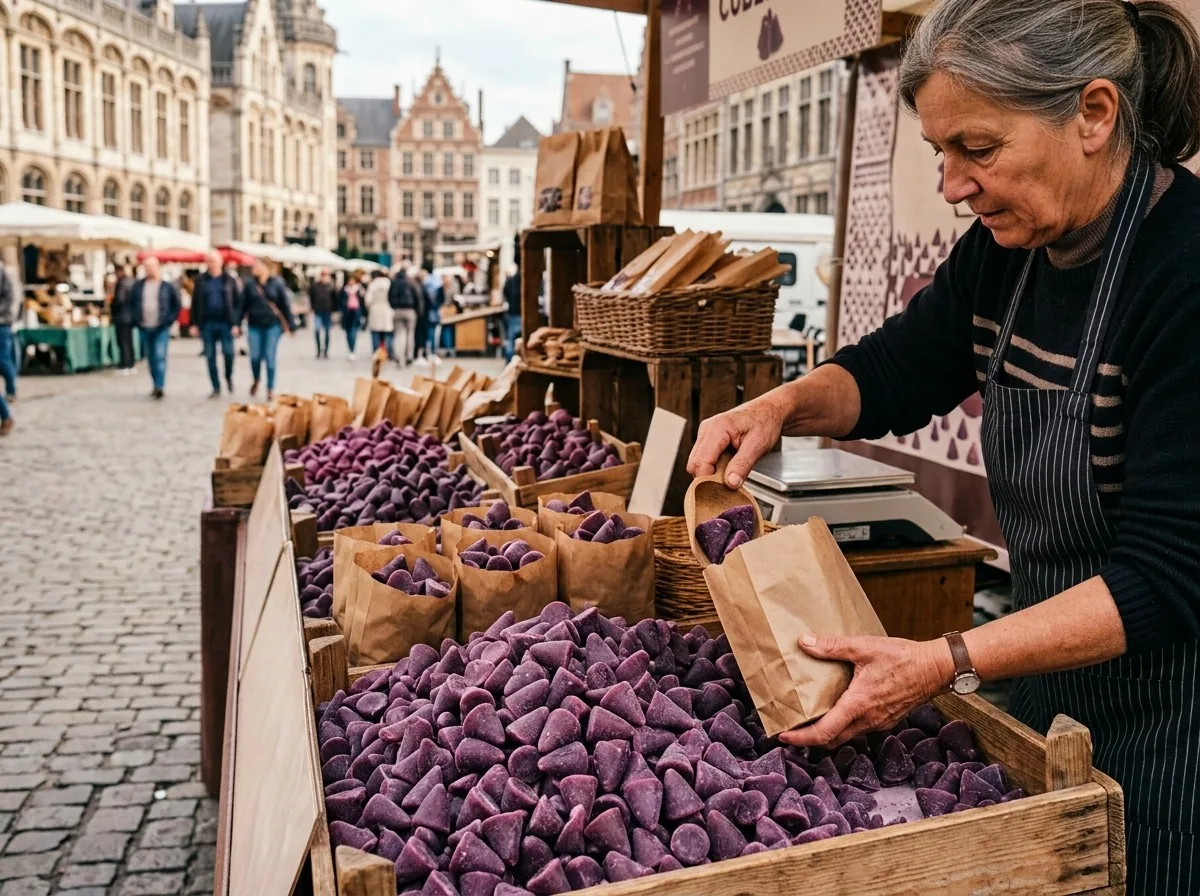
A good meal in Patershol runs EUR 18–25 (waterzooi, beer, bread). A tourist trap on the Graslei charges EUR 30–40 for the same thing and adds a EUR 5 cover charge. Bakeries (broodnodig, farina, local chains) offer pastries for EUR 2–4 and excellent coffee. Markets (Graffiti Street has one on Saturdays) sell Belgian waffles for EUR 3–4. In short: eating well is cheap if you avoid the obvious places.
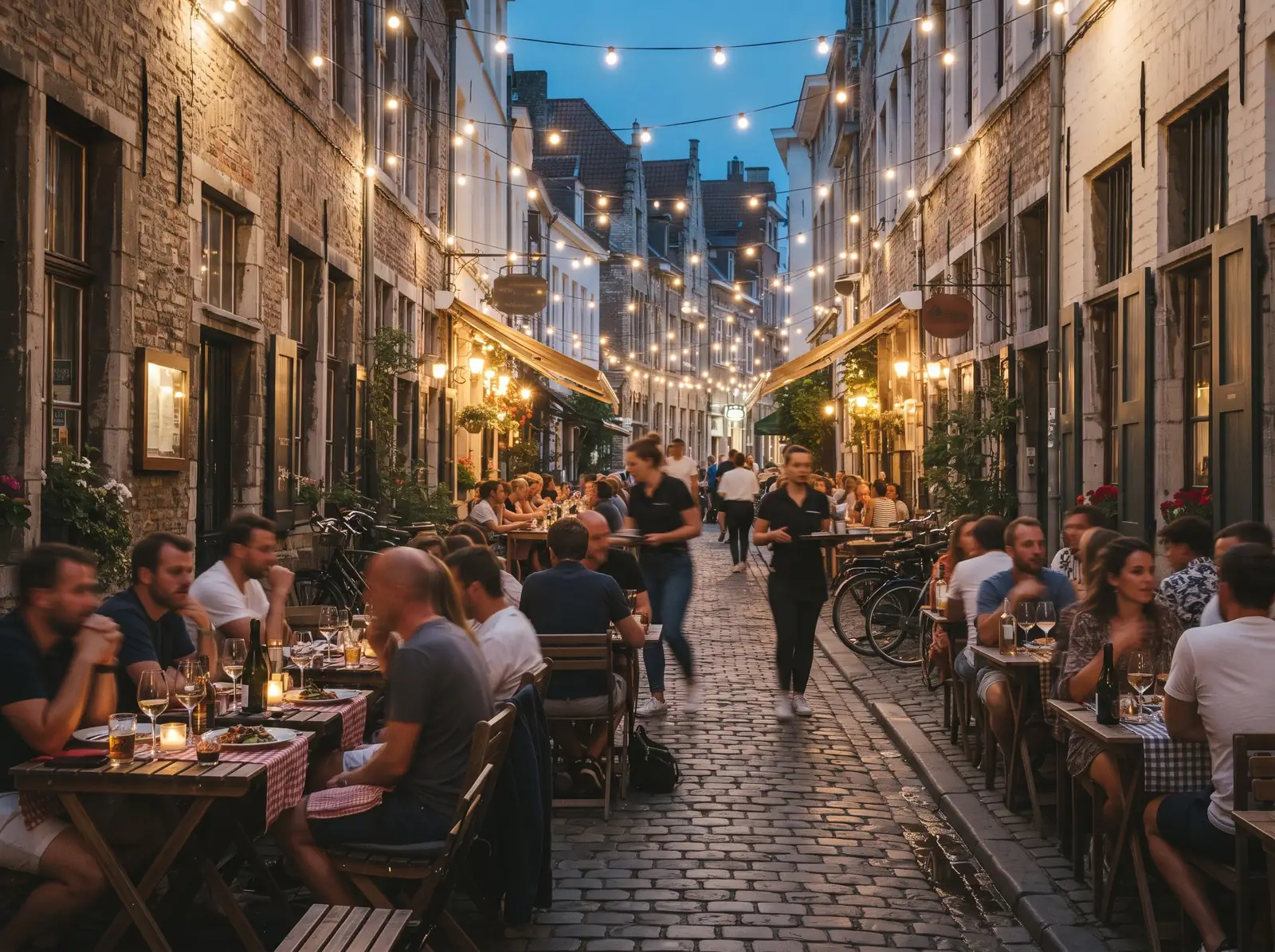
Mid-range daily budget: EUR 80–120 (3-star hotel EUR 100–120, food EUR 30–40, sightseeing EUR 20–30). Ghent is cheaper than Brussels and Bruges. Bring a Visa or Mastercard; most places take cards now. Some small cafes still prefer cash.
When to visit: the seasons and the Gentse Feesten
| When | Weather | Crowds | Verdict |
|---|---|---|---|
| April–June | Mild, 15–20°C | Manageable | Ideal — May and June are nearly perfect |
| July | Warm | Packed (Gentse Feesten) | Electric, but book months ahead |
| August | Warm | Quiet | Calm; many locals leave for the coast |
| September | Golden light | Manageable | Ideal — the other sweet spot |
| October–early Nov | Heavy rain likely | Low | Pack for rain |
| November–February | Dark and cold | Lowest | Solitude and grey medieval light |
April to June and September are ideal — mild weather (15–20°C), manageable crowds, the city in green and bloom. May and June are nearly perfect. September is golden light and locals returning from holidays.
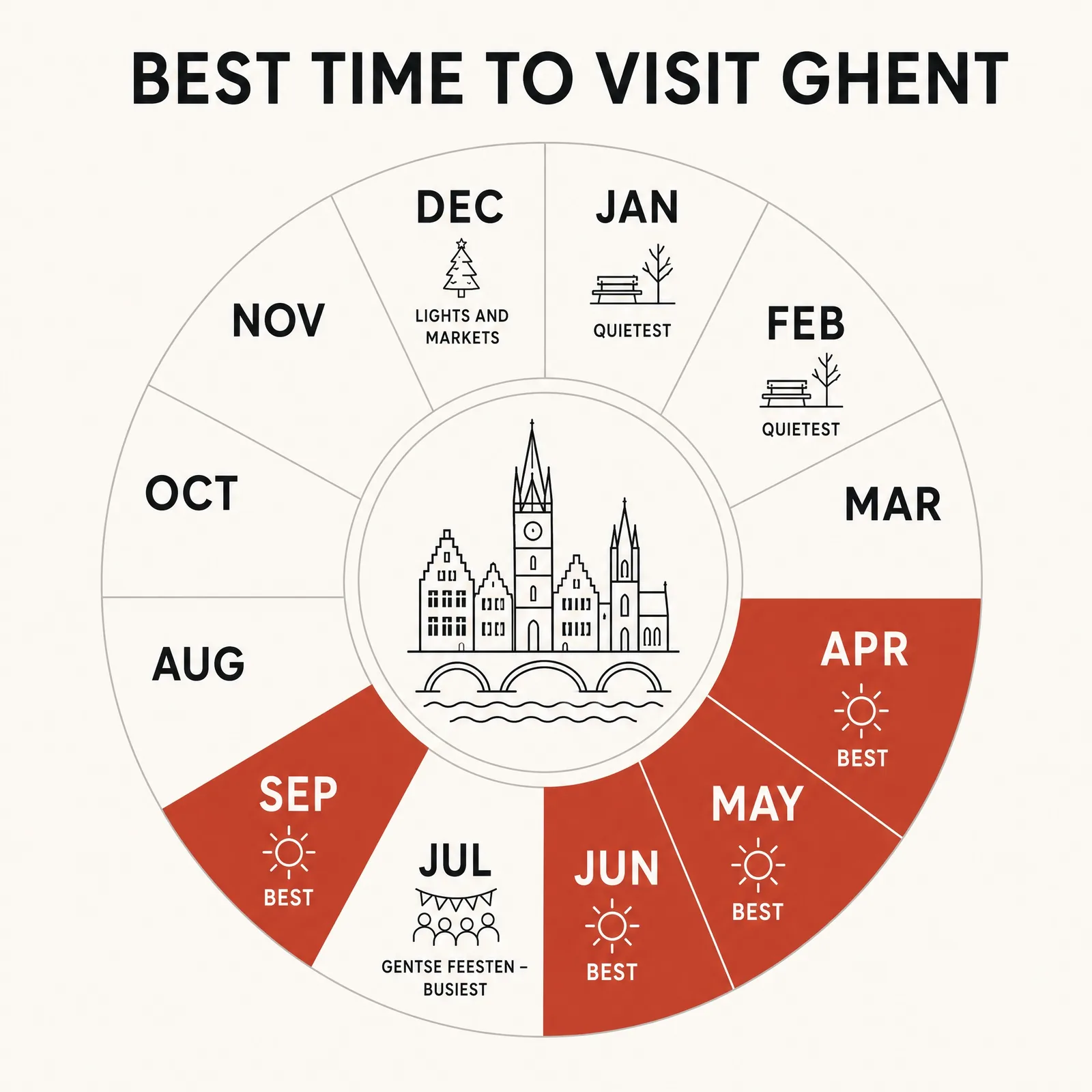
July is the Gentse Feesten, a 10-day music and theatre festival (busiest, loudest, most festive). The city is packed, hotels book up months ahead, but the atmosphere is electric. August is quiet; many locals leave for the coast. October through early November can rain heavily. November to February is dark and cold, but if you like solitude and grey medieval light, you’ll have the streets nearly to yourself.
Budget guides: shoestring, mid-range, and comfort
| Tier | Bed | Food | Sights | Daily total |
|---|---|---|---|---|
| Shoestring | Hostel dorm EUR 30–40 | Bakery and street food EUR 15–20 | One monument EUR 10–13 | ~EUR 70 |
| Mid-range | 3-star hotel EUR 100–120 | EUR 30–40, two sit-down meals | EUR 15–25, all core monuments | ~EUR 150 |
| Comfort | 4-star hotel EUR 150–200 | EUR 60–80, fine dining | EUR 30–40, museums and a guide | ~EUR 260 |
Line-by-line breakdown: what a Ghent trip costs.
Shoestring (EUR 70/day): Hostel dorm EUR 30–40, street food and bakery EUR 15–20, one paid sight EUR 10–13 (usually just Gravensteen), beer or wine EUR 5–10. This budget skips sit-down restaurants and all but one paid monument. Lunch is a sandwich, dinner is kebab. Feasible if you sleep well on dorm beds and don’t mind basic food. You see the city and have the experience; you just don’t eat well.
Mid-range (EUR 150/day): 3-star hotel EUR 100–120 (Booking.com standard rates), food EUR 30–40 (lunch EUR 12–15, dinner EUR 18–25), sightseeing EUR 15–25 (Gravensteen, canal, St Bavo’s, maybe Belfry). Covers all core monuments, one museum afternoon, two proper sit-down meals, coffee breaks, a beer. This is the comfortable Ghent: eat well, see everything, sleep in a real bed, no stress. Most visitors fit here.
Comfort (EUR 260/day): 4-star hotel EUR 150–200, restaurants and cafes EUR 60–80 (fine dining, upscale lunches, pastries, wine), museums and tours EUR 30–40 (multiple museums, private guide, special exhibitions). Eat at Michelin-listed spots, skip nothing, stay in a design hotel, hire a local walking guide. This is indulgence: you have time, money, and no tradeoffs.
Common mistakes to avoid
Don’t book only weekends (Saturday/Sunday are busier than weekdays, crowds thicken from 10:00–17:00, no difference in what you see). Weekday visits reward you with quieter streets and easier restaurant seating.
Stop comparing it to Bruges. Ghent is compact, medieval, alive with students — and actually inhabited year-round.Bram De Waele
Don’t skip Gravensteen ramparts thinking it’s just an entry fee. The EUR 13 entry is the best money you’ll spend in Ghent. The view is where the city clicks into place.
Don’t expect major art museums like the Uffizi or Prado. The Design Museum and fine art gallery are worthwhile (especially MSK for Flemish masters) but not world-class. Ghent’s real art is the medieval architecture and street life, not what’s in galleries.
Don’t plan a day trip from Brussels expecting to return the same evening if you arrive after 15:00. Train journey from Brussels (40 min) eats time; if you land at 16:00, you’ll only have 3–4 hours in Ghent. Better to arrive 09:00–10:00 or stay overnight.
Don’t try to combine Ghent and Bruges in one day unless booking a guided coach tour. Both cities demand a full day; rushing both leaves you exhausted and disappointed. They’re 30 min by train; pick one and return another visit.
Don’t assume you need a bike just because Ghent is called a cycling city. The medieval core is best on foot (narrow alleyways, pedestrian plazas). Bikes are useful for cycling outside the centre or covering distances if you have 2+ days, but not essential for core sightseeing.
What you should actually do

Day 1: Arrive morning, book a canal cruise for 16:00. Spend 14:00–16:00 walking the Gravensteen ramparts slowly. After the cruise, sit on the Graslei with a beer and watch the light change. Dinner in Patershol at 19:00. Sleep.
Day 2: Walk the museums (Citadelpark — pick one: Design or fine art) or revisit the cathedrals if weather is bad. Lunch in Patershol. Afternoon walk through quiet lanes (Sint-Jacobs, Bijloke, Vrijdagmarkt). Return to the Graslei at sunset. If you have only one day, skip the museums entirely and use those hours on the canal, in Patershol, and on the ramparts.
The key: no research, no reservation urgency. Just the canal first to orient yourself, Patershol always for the food, and the Graslei at dusk for the moment. That’s Ghent.
Frequently asked questions
How many days do you need in Ghent?
One full day covers the core loop; two days is comfortable and adds museums and a proper evening. See how many days in Ghent for the full reasoning.
Is Ghent walkable?
Yes. The historic centre sits inside roughly 1.5 km. Gravensteen to St Bavo’s Cathedral is about a 15-minute walk, and most visitors never board a tram except for the station run.
Is Ghent worth visiting compared with Bruges?
Ghent trades Bruges’ postcard perfection for a lived-in university-city feel, lighter crowds and livelier evenings. The honest comparison is in Ghent or Bruges.
How do I get to Ghent from Brussels?
The IC train takes 32–40 minutes, runs roughly every 10 minutes and costs about EUR 11 one way. Arrive at Gent-Sint-Pieters and take tram 1 to the centre — details in Brussels to Ghent.
What should I book in advance?
Gravensteen entry uses timeslot booking via the official site, and the 50-minute canal boat sells out on summer afternoons. Everything else in Ghent can be decided on the day.