Belfry of Ghent: UNESCO tower, city views, dragon (2026)
Why the Belfry matters
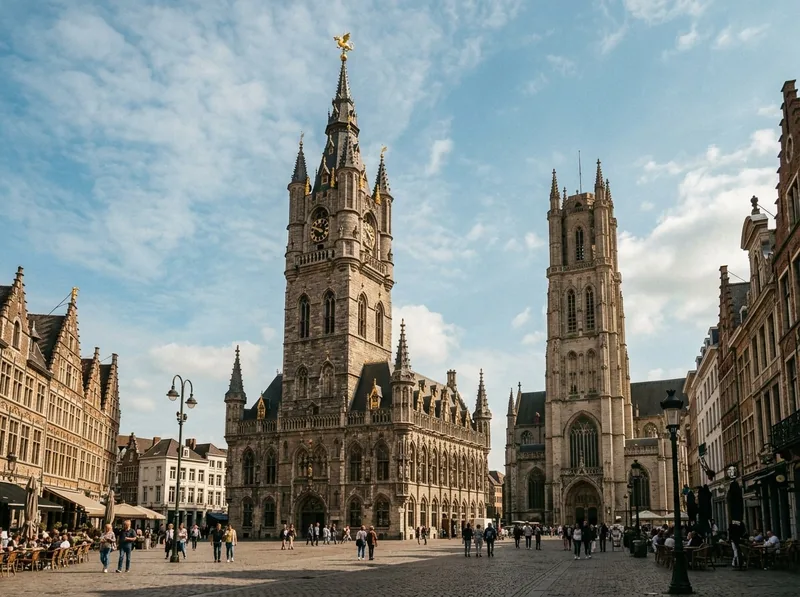
The Belfry was built starting in 1300 by the merchant guilds and city council as a statement: this tower belongs to the people of Ghent, not to a king or bishop. A dragon on top symbolised the city’s independence. For 500 years, it held the city treasury and bells that called merchants and city council to assembly. Today, it’s one of Europe’s finest examples of Gothic and Renaissance civic architecture, and a UNESCO World Heritage site (as part of Ghent’s historic centre).
The tower lost its original dragon in 1554 (war damage); the current gilded copper dragon dates to 1380 (a copy, respectfully restored). The bells above still ring the hours. The whole structure is the pride of Ghent.
Ways to experience the Belfry
Three ways to visit: a guided walking tour that includes the Belfry climb, a private tour with more flexibility, or self-guided climb with audio guide in the tower itself.
Ghent walking tour with Belfry climb
Start in Sint-Baafsplein, climb the Belfry with a guide (45 min), then walk Graslei & Korenlei quays, the medieval lanes, and maybe St Bavo’s. Guides explain the tower’s history and point out sculptures. Relaxed pace, small groups, includes entry.
Check ticketsPrivate 2-hour walking tour
Customise your route. Climb the Belfry at your own pace with a personal guide. Add St Bavo’s, lunch recommendations, or focus entirely on the medieval core. Private pricing applies.
Check ticketsGhent canal cruise
See the Belfry and cloth hall from the water. The tower and its reflection dominate the Graslei quay. Combines with a walk to the top if you book a walking tour on the same day.
Check ticketsBook the guided walking tour if it’s your first visit to Ghent; guides explain the tower’s place in the city’s story. Go alone if you want photos without a schedule.
Climbing the Belfry: two routes
Route 1: Lift + 66 stairs (easiest, 15 minutes to top)
The lift takes you to 63 metres (just below the bell chamber). From there, 66 narrow spiral stairs lead to the observation deck. The stairs are steep and tight; hold the rail. At the top: 360° views of Ghent. This is the standard route and the one most people take.
Route 2: Full climb, all 366 stairs (1 hour to 1.5 h)
Climb from ground level all the way. The first 200 stairs are in the main tower shaft; then narrower sections through the belfry chamber (where the bells hang) and the bell deck. The views improve with every 50 stairs. Only do this if you’re comfortable with steep, narrow, “medieval staircase” stairs. No lift option mid-way, so commit to finishing.
The views from both routes are identical. Choose the lift + stairs route unless you’re after the full-climb experience or taking photos.
What you see from the top
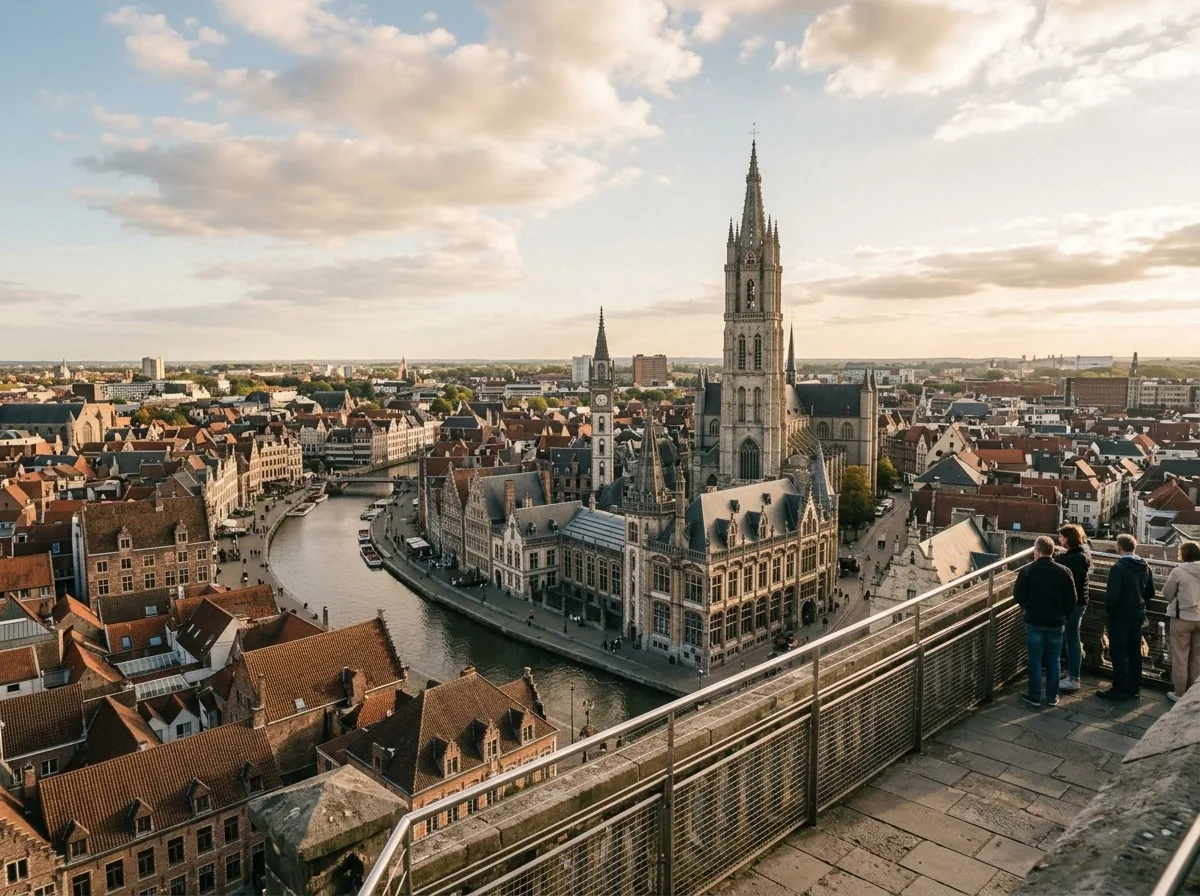
Looking north and east: the red-brick rooflines of Graslei and Korenlei (the medieval harbourfront), the Sint-Michielsbrug bridge, and the Citadelpark gardens beyond. Looking south: Sint-Baafskathedraal (St Bavo’s) and its spire. Looking west: the modern Citadelpark, Kunstmuseum, and the green of the city outskirts. The city spreads below in concentric rings: medieval centre, guild houses, 18th-century neighbourhoods, then 20th-century suburbs. On clear days (rare in autumn/winter), you can see the Waasland countryside 20 km south.
The bells in the chamber below ring the quarter-hours (four chimes), half-hours, and hours (full carillon). If you’re there on the hour, the bell concert is loud and mesmeric—literally in the tower with them.
The dragon: symbol of Ghent’s independence
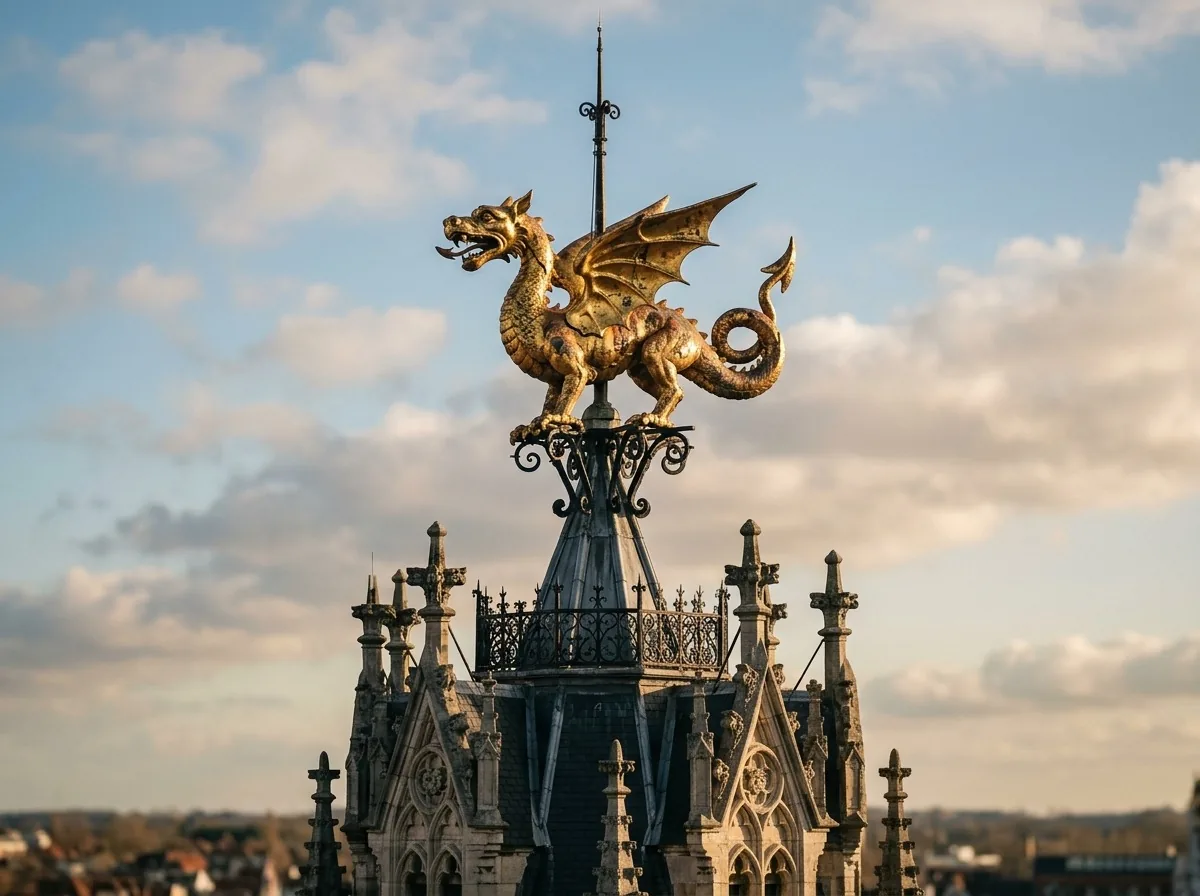
The copper dragon perched on the tower (at 91 m, above the observation deck) is a weathered sculpture, regilded in the 1990s. It faces northeast (toward Holland), and in old Ghent lore, it “guards the city’s freedom.” The original dragon was destroyed in 1554 during the Spanish occupation; the current one is a careful restoration. You see it best from afar (from Sint-Michielsbrug, Graslei, or during the canal cruise). Close-up, it’s a lovely detail, but from the observation deck you’re standing just below it, so the angle is awkward for photos.
The cloth hall: connected and free to walk
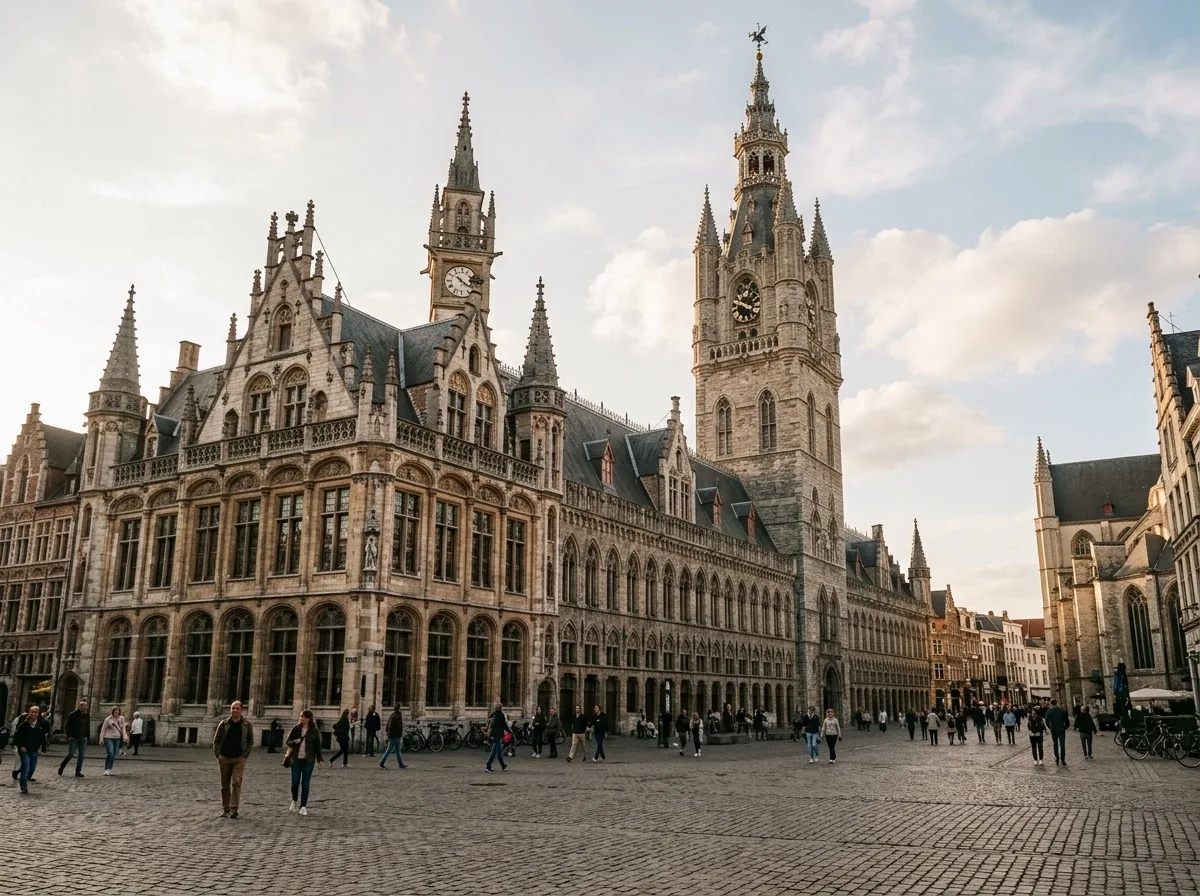
Directly below the Belfry sits the Cloth Hall (Lakenhalle), built 1426–1500 as a marketplace for cloth merchants. It’s still standing, now housing shops and cafes along a charming arcaded street. Walk through for free. In medieval times, the ground floor was a bustling market; the upper floors stored textiles and goods. Today, it’s atmospheric: narrow shop windows, tile work, and plaques naming the original guilds (weavers, fullers, etc.). Stop for coffee at one of the cafes, or browse the bookshops and clothing boutiques.
Tickets and hours
Adult: EUR 13. Youth (13–25): EUR 2.60–6.50. Children under 12: Free. Groups (15+): EUR 9 per person. Ghent residents and students: reduced rates available.
Hours: Daily 10:00–18:00 (last entry 16:40). Seasonal hours may apply; check historischehuizen.stad.gent for updates. Timeslot entry: book online or buy at the ticket kiosk in Sint-Baafsplein (right next to the tower). No reservation needed off-season; in summer (June–August), book online to skip the queue.
How long to spend
Quick visit (45 minutes): Lift + stairs to the top, photos, walk down. Perfect if the Belfry is one of many stops in a half-day itinerary.
Full visit (1.5 to 2 hours): Climb to the top, linger on the observation deck (views never get old), walk through the cloth hall below, grab coffee. Walk to Graslei & Korenlei (5 min), or Gravensteen castle (10 min walk). Combines naturally with St Bavo’s (2 min walk) and a canal cruise (starts from Graslei, 5 min).
Nearby: what to combine with the Belfry
The Belfry sits in the heart of Ghent. Graslei (the quay with the golden guild houses) is a 1-minute walk. Canal boats depart from Graslei (50 min, EUR 13). St Bavo’s Cathedral (with the Ghent Altarpiece) is a 2-minute walk. Gravensteen castle (for history buffs) is a 10-minute walk across Sint-Michielsbrug. The Patershol neighbourhood (steep winding lanes, restaurants) is a 10-minute walk. The one-day Ghent itinerary places the Belfry at 16:00, just before golden-hour photos at Graslei. English speakers: yes, guides and signs are in English; the information panels in the tower are in four languages.
Did you know? Five Belfry facts
- The Belfry is 91 metres tall and weighs over 2,000 tonnes. Its foundation goes down 15 metres below street level, into clay and sand.
- The current dragon (gilded copper) is a replica of the original, lost in 1554. The sculpture faces northeast, toward the Low Countries border—a symbolic watch-guard for the city’s freedom.
- The bell chamber holds 49 bells, the largest of which weighs 6 tonnes and is called the “Rol” (the Roller). They ring the hours, quarter-hours, and holidays.
- The Belfry bell carillon (49-bell automated system) plays a different tune every day. Listen at noon or during public concerts (May–September, Sundays 15:00).
- In 1540, Emperor Charles V ordered the town to remove the dragon and replace it with an eagle (symbol of imperial power). Ghent refused and hid the dragon; it was restored after Charles’s death in 1558.
A brief history
| Year | What happened |
|---|---|
| 1300 | The merchant guilds and city council begin construction of the Belfry to assert Ghent’s independence from the Count of Flanders. |
| 1380 | The original gilded dragon (symbol of Ghent’s liberty) is raised on the spire; it becomes the city’s emblem. |
| 1426 | The Cloth Hall (Lakenhalle) is completed beneath the Belfry; it becomes the centre of Ghent’s cloth trade. |
| 1482 | The Belfry is largely complete (though repairs and additions continue for centuries). |
| 1540 | Emperor Charles V demands the dragon be removed and replaced with an eagle. Ghent hides the dragon; it is restored in 1558. |
| 1554 | War damage destroys the original dragon during the Spanish occupation of Ghent. |
| 1999 | The Belfry is designated a UNESCO World Heritage site (as part of Ghent’s historic centre). |
Frequently asked questions
How long does it take to reach the top?
With the lift: 15 minutes total. The full 366-stair climb takes 45 minutes to 1.5 hours depending on fitness. Most people take the lift.
Is the Belfry accessible for people with mobility issues?
The lift goes to 63 metres (just below the bell chamber). From there, 66 narrow spiral stairs reach the observation deck—steep and tight, no alternative route. Call historischehuizen.stad.gent before visiting if you need full accessibility information.
Can you see the dragon from the observation deck?
You stand just below it. The angle is awkward for photos from the deck itself. Better views of the dragon are from Graslei quay (30 metres away) or from Sint-Michielsbrug bridge (50 metres).
What’s the difference between the Belfry and Gravensteen?
The Belfry is a civic tower (1300s, merchants’ independence). Gravensteen is a military castle (1180, count’s residence and prison). Both are medieval, but the Belfry is about city freedom; the castle is about feudal power.
Is it worth climbing if I’m not interested in medieval history?
Yes, the views alone are worth EUR 13. The 360° panorama lets you understand Ghent’s geography: the medieval core (red roofs around you), the guild houses of Graslei, the cathedral spire, and the modern city beyond. Photography is excellent, especially in golden hour (17:00–18:30).