Graslei and Korenlei Ghent: medieval quays, golden hour, and boat trips (2026)
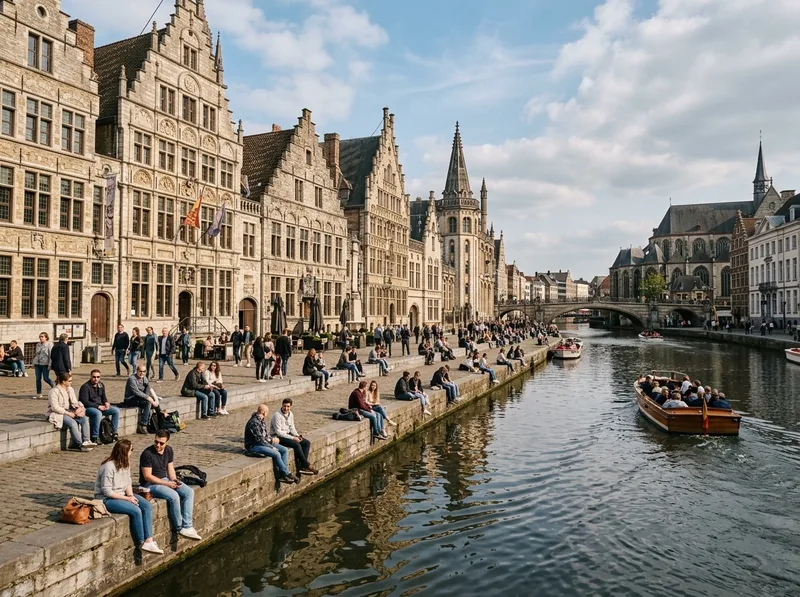
Graslei and Korenlei: the heart of medieval Ghent
Graslei ("grass wharf") and Korenlei ("grain wharf") are two parallel quays separated by the Grasbrug bridge, dating to the 13th century when Ghent was a major European wool, grain, and spice trade hub. The guild houses lining both quays are genuine medieval and Renaissance buildings, now restaurants and shops. The south-facing facades of Graslei catch light all day, making it one of Europe’s most photographed riverfront scenes. Korenlei, on the opposite bank, is quieter and offers views of the city reflecting in the water.
The best photo time is 3 to 6 p.m., when the north side of Graslei catches golden light. In good weather, Korenlei mirrors the city perfectly at dusk. Come early morning (8–9 a.m.) to avoid crowds, though the light is cooler.
Guided river cruise from Graslei
50-minute scenic boat tour departing Graslei dock (4.5 stars, 6,268 reviews). See Graslei from the water, pass Gravensteen, the Belfry, and the city’s canal network. No food included.
Check ticketsGuided Graslei and medieval city tour
2-hour English-language walk covering the guild houses, trade history, architecture, and the merchant families who lived here. Includes Graslei, Korenlei, and nearby medieval streets.
Check ticketsWalk, eat, and taste Belgian specialties
Guided 3-hour food experience sampling Belgian fries, waffles, chocolate, beer, and local dishes at multiple stops. Includes Graslei atmosphere and expert cultural commentary.
Check ticketsWhat to see at Graslei and Korenlei
The quays are essentially a long outdoor gallery: walk the length on both sides, pause at cafes for drinks or food, sit and watch the water, and photograph the facades and reflections. Both quays are flat, pedestrian-only, and easy to navigate. Most visitors spend 45 to 90 minutes total: 15 minutes walking both quays, 30 to 60 minutes sitting at a cafe or restaurant.
Graslei: the guild houses and riverfront

Graslei is the showpiece: five centuries of guild houses (wool, grain, spice, masons, fruit) stand shoulder-to-shoulder along the south bank of the Leie river. Each building has a unique facade: stepped gables, decorative stonework, and original windows. The buildings date from the 1200s to 1700s, though most were reconstructed after World War II bombing and maintain their medieval character. Today, the ground floors are restaurants and bars; the upper floors are restaurants, offices, or luxury apartments. The quay is pedestrian-only and always bustling with visitors, diners, and rowers launching from the dock.
Stand at the Grasbrug (St Michael’s Bridge) midway along Graslei and look west toward the Belfry — this is the classic Ghent postcard angle. Photograph from the opposite bank (Korenlei) to capture the full facade of Graslei mirrored in the water.
Korenlei: views and quiet corners
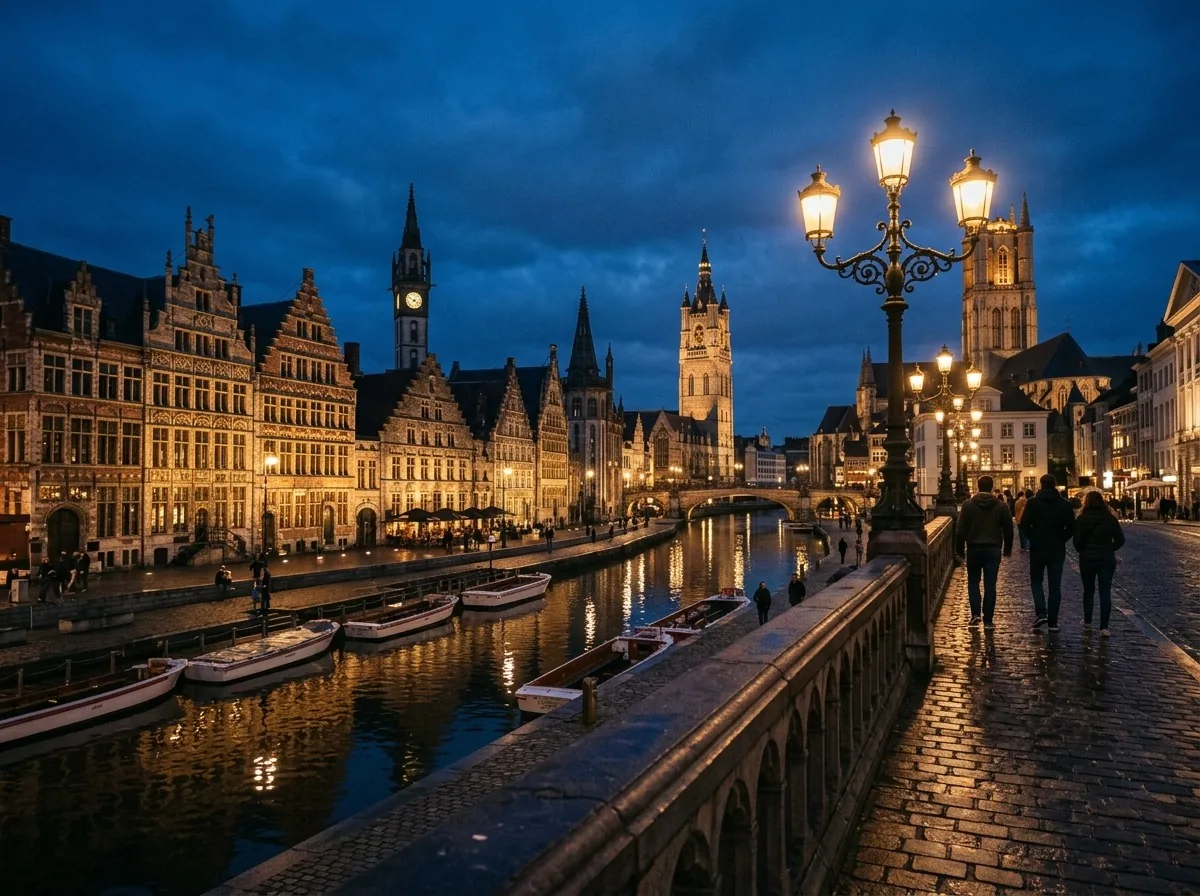
Korenlei, the quieter north bank, faces Graslei and offers excellent photo angles looking back at the guild houses. The Korenlei side is less crowded, with a few smaller restaurants, cafes, and benches for sitting. You get the water reflections, the peace, and the views without the peak-hour restaurant crush. Allow 20 to 30 minutes to stroll Korenlei’s full length, pause at a cafe, and soak in the river atmosphere.
Boat trips from Graslei
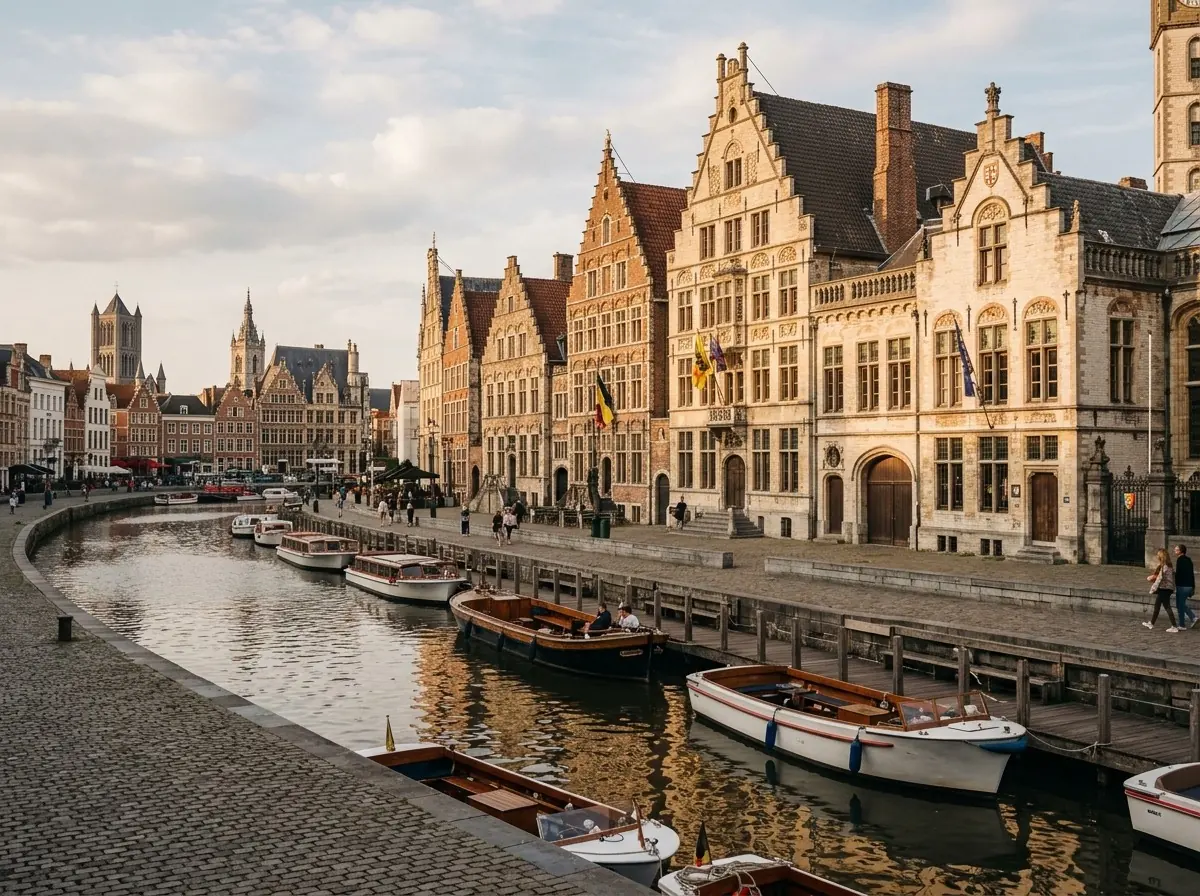
The dock at Graslei is where canal boats depart (signage at the quay). Tours are typically 50 minutes, covering the Leie river, passing Gravensteen fortress, the Belfry tower, and smaller canals. The experience gives a completely different view of the city: seeing the guild houses from water level, understanding the medieval trade route, and feeling the water city that Ghent truly is. Tours run year-round, with reduced frequency in winter. Book online or at the dock.
Book your boat trip online the day before if possible, especially on weekends. The boats are open-air in summer and covered in winter. Expect to be on the water for 50 minutes with some standing room; wear a light jacket.
Best time to visit
| Time / Season | What to expect |
|---|---|
| Early morning (8–9 a.m.) | Quiet, locals on bikes, cool light, few tourists, cafes setting up. Best for solitude and studying the architecture. |
| Midday (11 a.m.–2 p.m.) | Busy with lunch crowds, tour groups, harsh overhead light (not ideal for photos). |
| Golden hour (3–6 p.m.) | Peak photo time, warm light on Graslei, crowds moderate, restaurants filling up. The "postcard hour." |
| Evening (6 p.m.+) | Locals arrive, restaurants buzz, light cools, more intimate than daytime. Fewer tourists than midday. |
| May to September | Peak season; weekends are packed, boats full, cafe seating expands onto quay. |
| October to April | Quieter, cooler, some restaurants close winter hours, but still atmospheric and worth visiting. |
Getting to Graslei and Korenlei
Walking from the city centre
From the Belfry: walk downhill (south) for 5 to 7 minutes on Botermarkt, then follow signs to Graslei. From St Bavo’s Cathedral: walk east for 10 minutes toward the river. From Gravensteen Castle: walk south and downhill for 10 minutes.
By tram
Take tram 1 or 4 to Sint-Jacobs stop, then walk 2 to 3 minutes south down to the quays.
By bike
Ghent is bike-friendly; cycle from the city centre in 3 to 5 minutes. Bike racks are plentiful on both quays.
Where to eat at Graslei and Korenlei
Graslei restaurants (prime tourist location): Lines of waterfront cafes and restaurants with outdoor seating, EUR 18 to 40 per main, views guaranteed, quality mixed. Popular names include Graslei de Waterkant (fish), Karmeliet (Flemish), and many casual pizza/burger places. Korenlei (quieter side): Fewer options, but smaller restaurants with slightly lower prices, EUR 15 to 30 per main, less crowded. Quick bites nearby: Belgian fries stands (EUR 3–5), waffle carts (EUR 3–6), and sandwich shops scattered throughout. Most visitors sit at a Graslei cafe for an hour with a beer or coffee (EUR 4–8 per drink) — this is the quintessential Ghent experience.
Nearby to combine
Graslei and Korenlei sit in the heart of medieval Ghent. Within 5 to 10 minutes walk: Gravensteen Castle (north), St Bavo’s Cathedral (east), the Belfry (uphill south), and Patershol lanes (northwest). A full afternoon could be: boat trip (50 min) → lunch at Graslei (60 min) → walk Graslei/Korenlei (45 min) → climb the Belfry (45 min). Combine with a canal-side stroll or a visit to nearby Gravensteen for a complete medieval Ghent day.
Dos and don’ts
Do
- Visit at golden hour (3–6 p.m.) for the best light and the most atmospheric Ghent experience.
- Sit at an outdoor table with a drink for at least 30 minutes; people-watching and lingering are the point.
- Walk both Graslei and Korenlei; each offers a distinct perspective and views of the other.
- Book a boat trip to see the quays from the water; it changes your understanding of the medieval city.
- Photograph from the Grasbrug bridge (St Michael’s Bridge) and from Korenlei looking back at Graslei for the classic angles.
Don’t
- Don’t eat at Graslei restaurants unless you want prime-location markup and tourist-oriented food. Better meals are 2–3 minutes away.
- Don’t visit between noon and 3 p.m. if you want atmosphere; it’s peak tour-group chaos and harsh light.
- Don’t plan a full meal at Graslei unless you enjoy the premium for location. A drink + snack is the wiser play.
- Don’t assume all boat trips are the same; check that your tour actually departs from Graslei (some start elsewhere).
- Don’t photograph without respecting diners at cafes; be discreet and brief.
Did you know? Five Graslei facts
- Graslei was the busiest medieval harbour in Flanders, where grain ships from across Europe docked. Each guild house had a hoist to load goods directly from boats to storage above.
- The guild houses were almost entirely destroyed in World War II bombing (1940–1944). What you see today is a careful 1950s–1980s reconstruction using historical records and surviving fragments.
- The building called "Sint-Jorisgilde" (St George’s Guild) at Graslei 10 dates to 1542 and is the oldest continuously inhabited guild house. It now hosts a restaurant on the ground floor and apartments above.
- Graslei is one of the world’s most-photographed European riverfront scenes, rivalled only by Venice’s Grand Canal and Prague’s Charles Bridge for social media popularity.
- The name "Korenlei" comes from the Dutch word for grain ("koren"). This side of the river was where grain was measured and taxed before export, making it a crucial commerce point for centuries.
Frequently asked questions
Is Graslei free to visit?
Yes. Walking the quays and sitting at a cafe is free (you pay for food/drink). Boat trips cost from EUR 13 and depart from Graslei’s dock.
What’s the best time to visit?
Golden hour (3–6 p.m.) offers the warmest light and most atmospheric experience. Early morning (8–9 a.m.) is quietest. Avoid noon–2 p.m. if crowds bother you.
How long should I spend here?
45 to 90 minutes: 15 min walking both quays, 30–60 min sitting at a cafe. Add 50 min if you take a boat trip.
Are the restaurants good?
Graslei restaurants are pricey (EUR 20–40 per main) and prioritise location over cuisine. Sit for a drink and snack, or walk 2 min away for better-value meals.
What boat trips depart from here?
50-minute guided canal tours (around EUR 13) pass Gravensteen, the Belfry, and the city’s waterways. Book online or at the dock.
Can I combine Graslei with other attractions?
Absolutely. Nearby: Gravensteen (10 min north), St Bavo’s (10 min east), the Belfry (5 min uphill), and Patershol lanes (10 min northwest). All walkable in 1 day.