Patershol: medieval lanes, restaurants, brewery (2026)
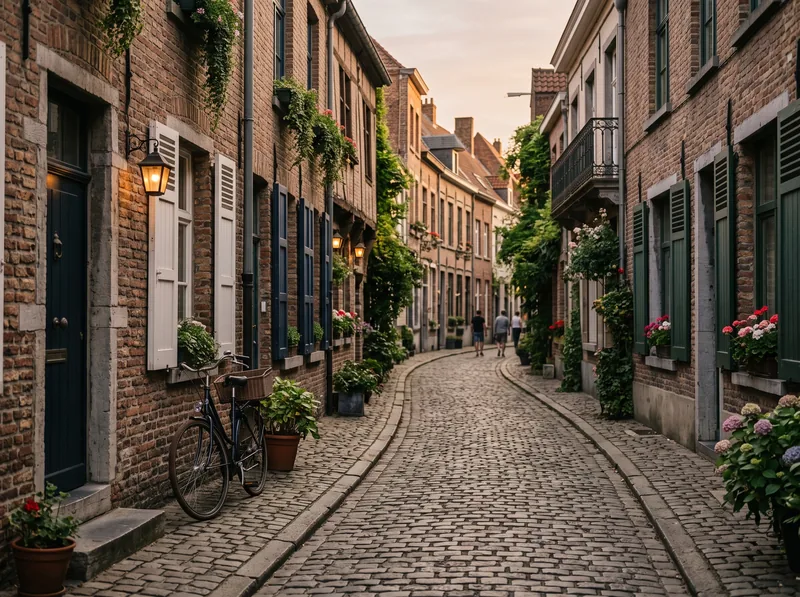
A neighbourhood fit for a walking guide
I live in Patershol (for full disclosure). The lanes are not laid out like a grid; they curve and twist around the friars’ chapel, past hidden courtyards, and under hanging ivy. You can walk from one end to the other in ten minutes, but you’ll want to linger. Every corner has a sense of scale—buildings lean inward, windows peer down at you, and light filters through like a forest canopy. The neighbourhood feels protected, even though you’re in the city centre. Locals and visitors alike call it the most atmospheric part of Ghent.
Ways to experience Patershol
Four main ways: a guided food tour, a chocolate-and-beer walk, self-guided strolling with dinner, or an early-morning photography walk.
Ghent food tasting tour in Patershol
8 tastings at different restaurants: cheese, Belgian chocolate, local beer, croquettes, shrimp, mussels prep, and a dessert. Guides explain the history of each dish and the neighbourhood’s evolution from friary to food district. Small groups.
Check ticketsBelgian chocolate walk with beer pairing
Start with artisan chocolate from a 100-year-old chocolatier, taste the stories behind each piece, walk the lanes, then pair with Belgian abbey beer in a restored medieval tavern. Combines Ghent’s two greatest indulgences.
Check ticketsBeer and sightseeing adventure
Visit a working brewery (Karmeliet or similar), see the brewing process, taste 5 house-made beers (or mocktails), walk Patershol, and end with dinner or snacks at a Trappist ale bar.
Check ticketsBook the food tour if it’s your first visit; guides know which restaurants are family-friendly vs. couples-only, and they reserve tables. Come alone in the morning (09:00–11:00) if you want quiet walks and photos without tourists.
The lanes: a self-guided walk
Entry from the south: Sint-Veerleplein
Start at Sint-Veerleplein (a small square next to the cathedral). The narrow lane to your right leads into Patershol proper. This is the “tourists’ entrance,” and within 20 metres you’ll be among crowds or solitude depending on the hour. The lane is cobblestone, about 2 metres wide, lined with 16th- and 17th-century townhouses.
Patershol Plein (the heart)
Follow the lanes and they converge at Patershol Plein, a small hidden plaza surrounded by restaurants and cafes. In summer, tables spill outdoors. This is the social hub. A stone plaque marks the site of the Carmelite chapel (demolished 1831). The plein is the perfect spot to sit, order waterzooi (Ghent vegetable stew) or mussels, and watch the lanes deliver new faces every minute.
Hidden courtyards
Duck down any side lane. You’ll find small courtyards (private), ivy-covered walls, a tiny bar (Broodnodig), and a bookshop (Puur). None of it feels like a tourist trap; it feels like you’ve stumbled into someone’s private garden.
Where to eat: a taste of Ghent
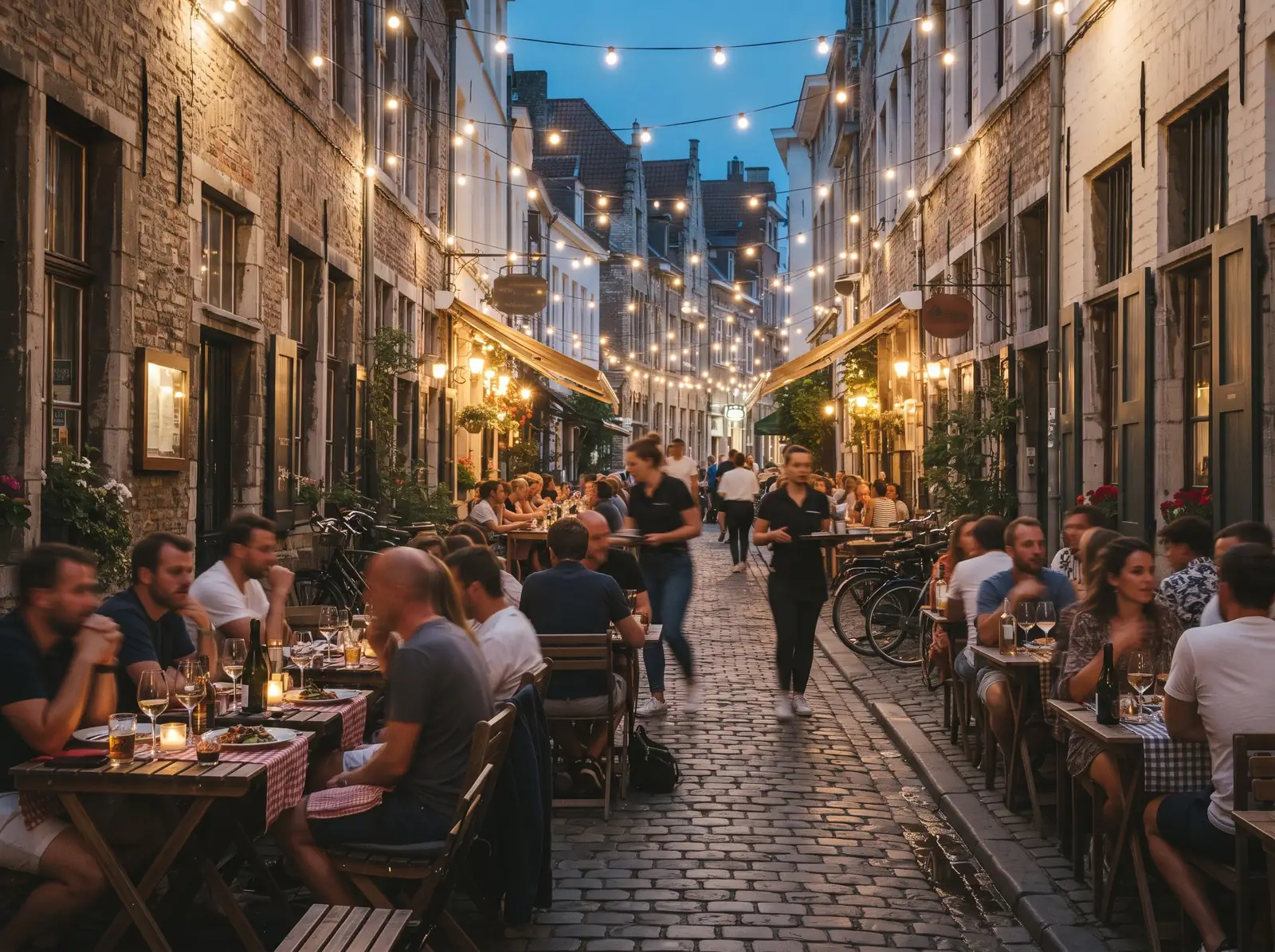
Waterzooi is the dish you must try. It’s a stew of vegetables (leeks, carrots, celery, potatoes) in a creamy broth, sometimes with chicken or fish. It’s humble and deeply satisfying. Every restaurant in Patershol makes it; pick the one with the best view.
Local favourites:
- Broodnodig (tiny bar, one table outside). Beer, bread, cheese. Casual. Open 17:00 onwards.
- Graffiti (tapas-style, mid-range). Mussels, croquettes, shared plates. Often packed; arrive early or book.
- De Graslei (waterfront, across the bridge). Michelin-starred, fine dining. Waterzooi elevated. Book weeks ahead.
- Chocolaterie Neuzekes (praline shop & cafe). Coffee & handmade chocolate. Morning or afternoon tea.
Budget: EUR 12–20 for casual meals; EUR 50–120 for Michelin experiences. Evening (18:30–21:30) is the social scene; lunch (12:00–14:00) is quieter and often cheaper.
The lanes and their history
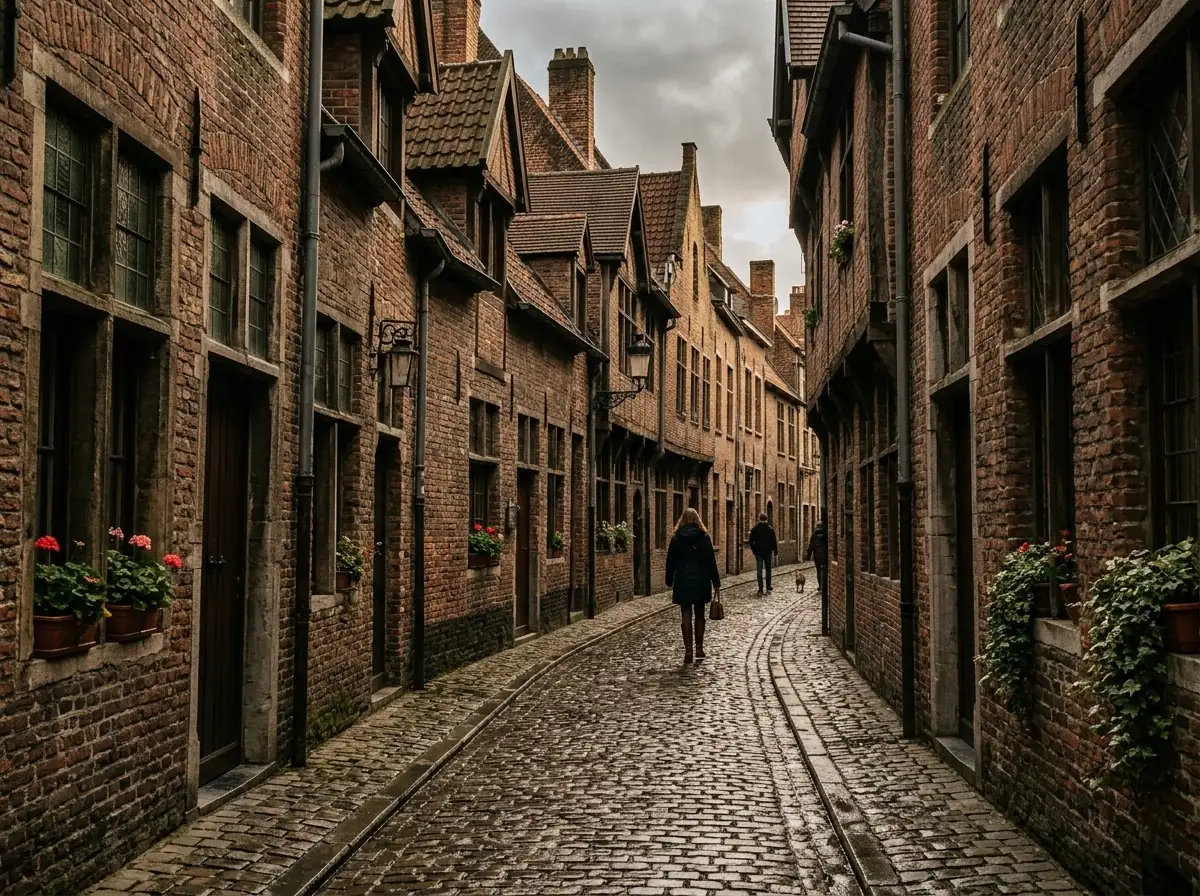
Patershol takes its name from the Carmelite friars (Paters Karmelieten, “fathers’s lane”) who built a friary here in the 14th century. The lanes between Sint-Baafskathedraal and Gravensteen became their domain. Over 200 years, the friars owned homes around the chapel, and laypeople rented the adjacent lanes. After the chapel was demolished (1831), the neighbourhood became purely residential and artisanal—weavers, dyers, stonemasons in the ground-floor workshops.
Post-World War II, Patershol fell into gentle decline: rough edges, squat housing, little investment. In the 1980s and 1990s, young artists moved in (cheap rent). Gradually, restaurants followed (chefs liked the atmosphere). By 2010, it had transformed into a dining destination while keeping its bohemian edge. Today, it’s the most expensive real estate in Ghent, yet still feels unpretentious.
Evening walks and light
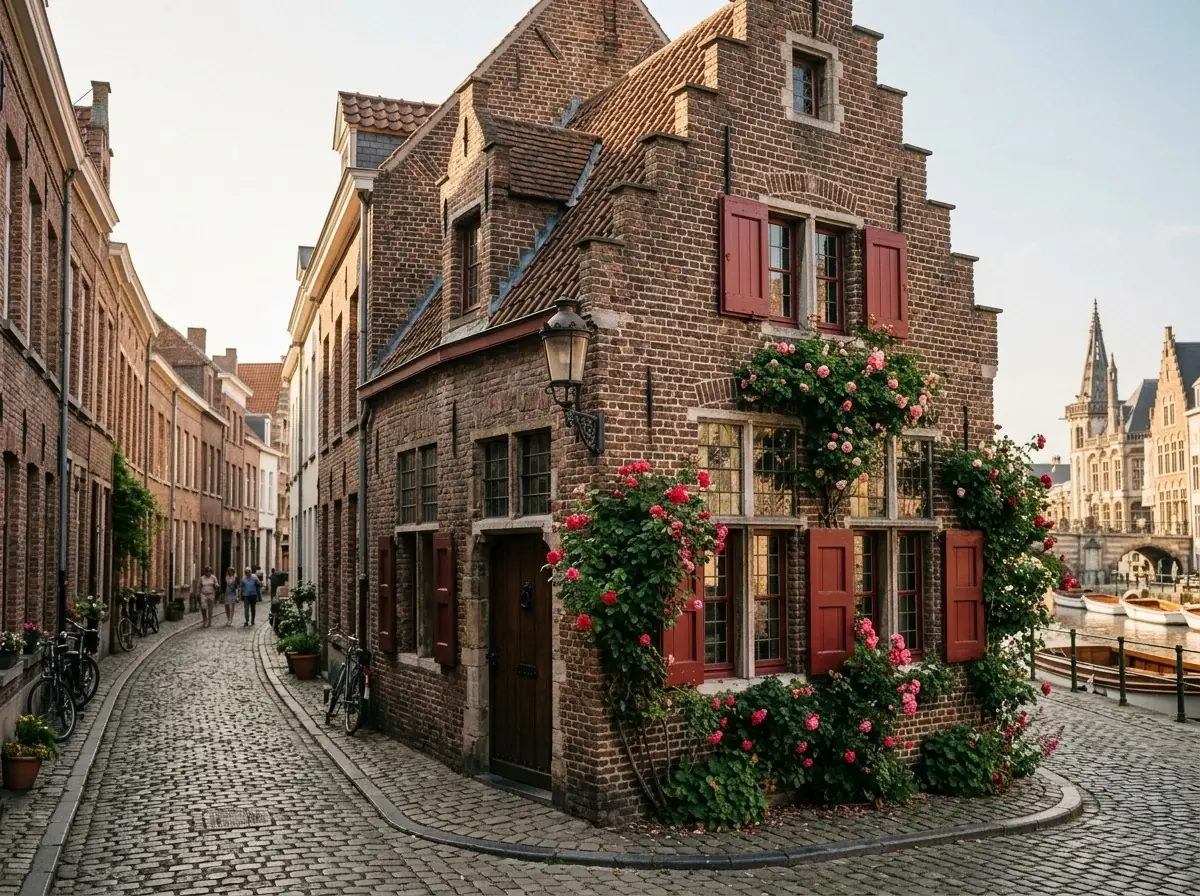
Visit in the evening (17:00–20:00), and the lanes shift from sightseeing tourist path to lived neighbourhood. Residents return home from work, restaurant staff prep outdoor tables, and the light angles low between the buildings. This is when Patershol feels most real and most photogenic. Bring a camera, let the lanes lead you, and stop when something calls to you. The randomness is the point.
The lanes are narrowest at dusk (18:00–19:00), so bring a small bag (no backpacks) and wear comfortable shoes. Cobblestone + heels = hazard.
What Patershol is not
Patershol is not a “tourist village” with theme restaurants or souvenir shops. There are no chain cafes, no fudge shops, no “ye olde” theatrics. What you see is genuinely old (medieval lanes) and genuinely lived-in (residents, workers, diners). That’s why it feels different from other medieval tourist quarters.
Combining Patershol with other Ghent sights
Patershol sits between two major attractions: St Bavo’s Cathedral (2-minute walk) and Gravensteen castle (5-minute walk). Most visitors approach it as a lunch or dinner stop while touring the city. The one-day itinerary places Patershol lunch at 12:30. For a half-day itinerary: canal cruise (50 min, departs Graslei) → walk to Patershol (10 min) → lunch 2–3 hours → St Bavo’s → Belfry → golden-hour photos at Graslei. For evening: Patershol dinner (18:30–21:30) is a complete experience on its own, pair with a walk across Gravensteen beforehand.
Did you know? Five Patershol facts
- The Carmelites left Patershol in 1568 during religious upheaval; their chapel was used for storage and later demolished. The stone plaques marking the chapel site are all that remain.
- In the 1940s and 1950s, Patershol was one of Ghent’s poorest quarters—crumbling buildings, no investment, and people were leaving. Urban renewal in the 1980s saved it.
- The lanes are so narrow (2–2.5 metres) that some streets have official “right of way” rules: if you meet someone head-on, one of you has to turn sideways or duck into a doorway to let the other pass.
- Waterzooi (the stew) originated in Ghent but is now claimed by Brussels and Flanders. In Ghent, locals argue theirs is the “true” version (vegetable-forward, not meaty).
- In 2020, Patershol was voted Europe’s best neighbourhood for dining by a European travel magazine, beating Barcelona’s Gothic Quarter and Venice’s Cannaregio.
A brief history
| Year | What happened |
|---|---|
| 1350 | Carmelite friars establish a chapel and friary in the area; the neighbourhood becomes known as Patershol (“fathers’ lane”). |
| 1568 | Religious upheaval during the Reformation; Carmelites leave or are expelled. The chapel is converted to storage. |
| 1831 | The Carmelite chapel is demolished. The neighbourhood becomes purely residential, with workshops and trades. |
| 1945–1970 | Post-war decline. Investment slows; young families move to suburbs. Patershol becomes one of Ghent’s poorest quarters. |
| 1985–2000 | Artistic renaissance. Young people move in, opening galleries and small cafes. First restaurants arrive. |
| 2010–present | Boom in fine dining. Patershol becomes Ghent’s premier restaurant neighbourhood, with several Michelin stars and international fame. |
Frequently asked questions
Is Patershol safe to visit at night?
Yes. The lanes are residential and restaurant-filled until 22:00. Walk in groups after midnight. The neighbourhood has a strong community feel; residents and diners create natural safety.
Do I need to book a restaurant table in Patershol?
Casual spots (tapas bars, Broodnodig): no reservation needed. Michelin-starred restaurants (De Graslei, De Graffiti): book 1–2 weeks ahead. Mid-range restaurants: walk-ins welcome most nights, but Friday–Saturday may be full; arriving before 19:00 helps.
What’s the best time to visit Patershol?
Dusk (17:00–19:00) for light and atmosphere. Weekdays (Tuesday–Thursday) for a quieter walk. Weekends (Friday–Sunday) are lively and crowded. Avoid 12:00–13:00 lunch rush if you want peaceful lanes.
Can you get lost in Patershol?
Yes, wonderfully. The lanes loop and twist; most lead to Patershol Plein (the central plaza) or back to the main streets. Even if you wander wrong, you’ll emerge within 5 minutes into recognisable Ghent. The neighbourhood is small (~0.5 km across).
Is there parking near Patershol?
No direct parking. Use the Sint-Veerleplein car park (100 metres), or bike. Ghent’s best accessed by train or bike; most visitors don’t use cars in the city centre.