Gravensteen Castle Ghent: medieval fortress and torture museum (2026)
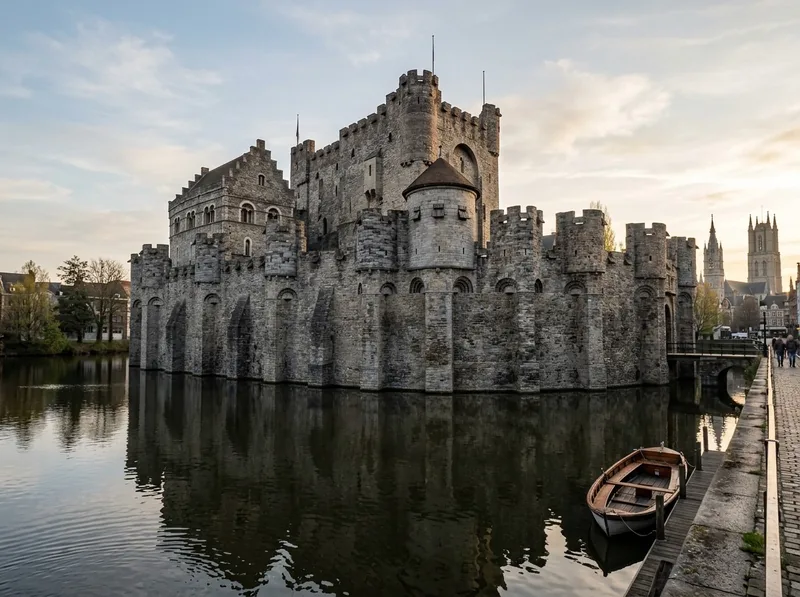
Gravensteen tickets and entry
Entry to Gravensteen includes access to all six floors of the castle, the ramparts, audio guides in multiple languages (Danish, Dutch, French, German, English, Spanish), and an optional visit to the basement torture museum. Booking is online-only via historischehuizen.stad.gent; visitors choose a timed slot (25-minute windows) on the day of visit. No tickets are sold at the gate.
Guided castle and Patershol walk
English-language guide covers the castle’s medieval past, the Patershol lanes, and the artisans who once lived here. 2 hours total, combines the castle with the surrounding historic neighbourhood.
Check ticketsExpert-led private tour
Arrange a private guide for the castle and neighbourhood. Groups or families only. Book via the castle’s ticketing website for availability and pricing.
Check ticketsRiver Leie boat tour from nearby Graslei
Scenic 50-minute canal cruise departing Graslei quay (5 min walk away). Passes Gravensteen from the water, the guild houses, and the belfry. Combine with a castle ticket for a full medieval Ghent experience.
Check ticketsBook your timeslot at least one day ahead via historischehuizen.stad.gent. Morning slots (10:00–11:00) have shorter queue times. The audio guide is included and is genuinely excellent — it walks through every floor with stories, medieval context, and military architecture.
What to see inside Gravensteen
Gravensteen is six floors, spiralling upward from the entrance through the counts’ chambers, kitchens, guardrooms, and armoury to the ramparts and towers. Most visitors spend 90 minutes to 2 hours, pausing to listen to audio guide stories and taking time on the ramparts for photographs. The castle is laid out chronologically, from the 12th-century foundations to the 19th-century museum restoration.
Ground floor: the great hall and torture museum (basement)
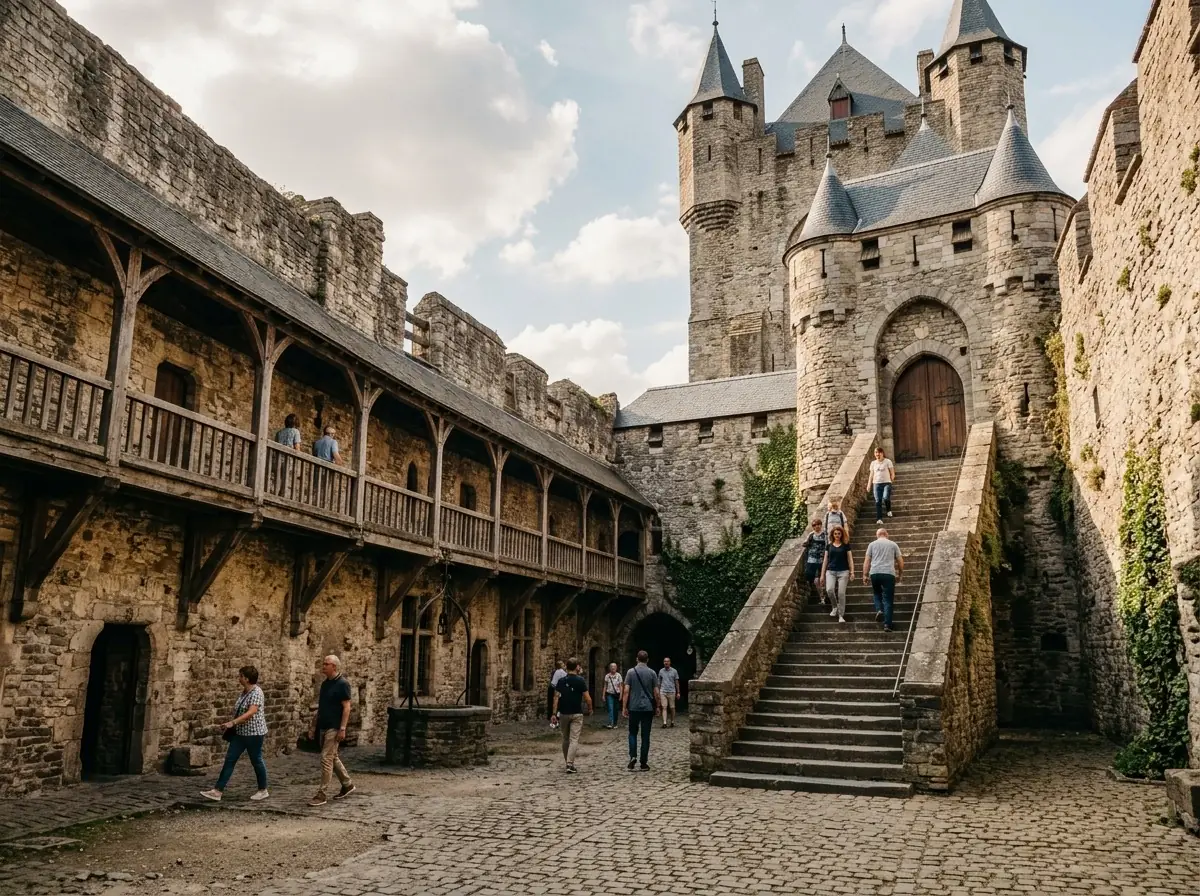
The entrance opens into a vaulted stone courtyard, the heart of the fortress. The ground floor (and basement below) houses the counts’ great hall, kitchens, and the ’torture museum’ — a collection of authentic medieval punishment tools and judicial devices. The torture exhibit is sober and historical, not sensationalised; the audio guide explains the legal and social context of each piece. Most visitors spend 20 to 30 minutes here before climbing.
The torture museum is educational rather than gruesome. It contextualizes medieval justice, showing tools like iron maiden replicas and branding irons. Skip if you find it unsettling, but the audio guide makes it worthwhile.
The ramparts and tower views

The rampart walkway circles the top of the fortress, offering sweeping views over Ghent: the Belfry tower (9 blocks away), St Bavo’s Cathedral spire, red-brick guild houses, the Leie river, and the medieval street grid. The ramparts are 35 metres high; the views are the second-biggest draw after the history. Spend 20 to 30 minutes up here, especially on a clear day or toward golden hour (4 to 6 p.m.).
The ramparts are narrow and steep; wear steady shoes. The view south toward Graslei (the riverfront quay) is the most photogenic angle. Visit in late afternoon for warm light on the city.
Medieval chambers and armoury (floors 2–5)
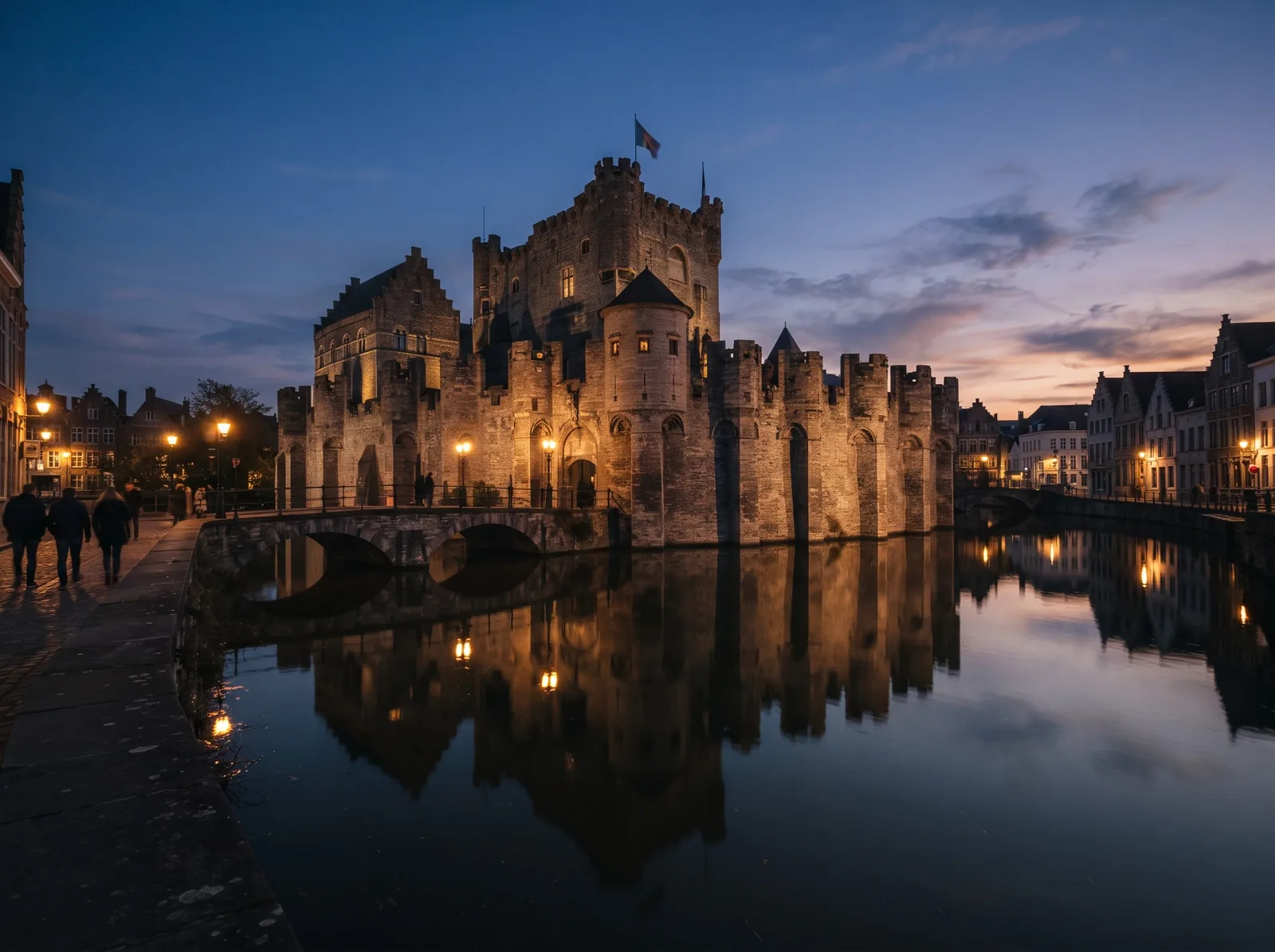
Floors 2 through 5 display the counts’ living quarters, sleeping chambers, a functional kitchen with original hearths, and an impressive weapons collection (crossbows, armour, swords). Each room is narrated by the audio guide, which explains what the counts did in each space and how medieval nobility lived. The floors are narrow and spiral upward, offering a sense of the castle’s labyrinthine layout. Allow 45 to 60 minutes for these floors, listening to the audio at your own pace.
History of Gravensteen
Gravensteen (the "Castle of the Counts") was built in 1180 by Count Philip of Alsace as a show of power in the thriving medieval city of Ghent. The fortress controlled trade on the Leie river and served as the administrative seat for the counts of Flanders for six centuries. By the 1600s, it was used as a prison; by the 1800s, it was nearly demolished before being rescued and converted into a museum in 1913. The castle has undergone multiple restorations, most recently in the 2000s, and remains one of Europe’s best-preserved medieval keeps.
| Year | Event |
|---|---|
| 1180 | Count Philip of Alsace builds Gravensteen to assert authority over Ghent and control the Leie trade route. |
| 1200s–1400s | The castle serves as the residence of the Counts of Flanders and the seat of power in the Low Countries. |
| 1600s–1800s | Gravensteen is converted to a prison and military barracks as the counts move to Brussels. |
| 1913 | The city of Ghent acquires the castle and opens it as a museum, preserving it as a symbol of medieval Flanders. |
| 2000s | Major restoration and audio guide installation bring the castle to modern museum standards. |
| Today | Gravensteen remains Ghent’s most-visited medieval monument, attracting 150,000+ annual visitors. |
Visiting with kids
Gravensteen is family-friendly: the ramparts are safe (railings in place), the audio guide is engaging for ages 8+, and the torture museum can be skipped if too intense. Families with younger children (5–7) may find the narrow stairs and long audio narrative taxing; allow extra time for breaks. The courtyard is open-air and spacious, good for running around before climbing. No stroller access inside (stairs only).
Getting to Gravensteen
Walking from the city centre
From St Bavo’s Cathedral (the main landmark): walk north 5 minutes on Graffstraat to reach Gravensteen. From the Belfry: walk 10 minutes northeast toward the river. The castle sits at the north edge of the medieval centre, signposted on every tourist map.
By tram
Take tram 1 or 4 to Sint-Jacobs stop, then walk 3 minutes north. Trams run from the main railway station (Gent-Sint-Pieters) through the city centre every 5 to 10 minutes.
By bike
Ghent is bike-friendly: rent a city bike (EUR 2–5 per day from any station) and cycle 5 to 10 minutes from the centre. Bike parking racks are at the castle entrance.
Nearby attractions to combine
Gravensteen sits at the gateway to Patershol, a tangle of medieval lanes and artisan studios just beyond the castle. After touring the fortress, spend 45 to 60 minutes wandering Patershol’s narrow streets, poking into galleries and cafes. St Bavo’s Cathedral and the Ghent Altarpiece are 5 minutes south. Graslei and Korenlei, the picturesque riverfront quays, are a 10-minute walk downhill toward the water. The Belfry and a canal boat trip are both 10 to 15 minutes south. Combine all five in a full-day medieval itinerary: Gravensteen → Patershol walk → cathedral → lunch at Graslei → canal boat → Belfry climb at sunset.
Dos and don’ts
Do
- Book your timeslot online at historischehuizen.stad.gent the day before or on arrival morning.
- Use the audio guide on every floor — it’s included and transforms a castle tour into a history lesson.
- Spend 20 to 30 minutes on the ramparts for views and photos; this is worth the climb alone.
- Combine with Patershol walking tour afterward (15 minutes away on foot).
- Visit in the morning (10:00–11:00) to avoid afternoon crowds and get the best light on the ramparts.
Don’t
- Don’t arrive without a pre-booked timeslot; they don’t sell tickets at the gate.
- Don’t skip the audio guide because you think you know the history. It’s genuinely engaging and included in the price.
- Don’t spend more than 30 minutes in the torture museum unless you’re deeply interested in medieval justice.
- Don’t visit on very rainy days; the stairs inside can get slippery and the rampart views vanish.
- Don’t assume all stairs are modern; some floors have steep, narrow stone spirals requiring care and steady shoes.
Where to eat nearby
Inside or at the castle gate: A small cafe (summer only) with coffee and snacks. Patershol neighbourhood (2 min walk): cosy restaurants and cafes in historic buildings, EUR 15 to 30 per main. Graslei quays (5 min walk): touristy but atmospheric restaurants and bars overlooking the river, EUR 20 to 40. City centre (10 min south): wide range of casual to fine dining options. Bring a picnic to the park grounds below the castle if budget is tight.
Did you know? Five Gravensteen facts
- Gravensteen was built in just four years (1176–1180), making it one of Europe’s fastest-constructed medieval castles. The speed was a power statement by Count Philip of Alsace.
- The castle was nearly demolished in 1860 when Ghent city planners wanted to tear it down to make room for modern development. Public outcry saved it.
- The moat that once surrounded Gravensteen is now gone, replaced by park lawns. You can still see the ditch outline on aerial maps.
- The torture museum collection is historically authentic, sourced from genuine medieval judicial records and surviving artifacts. Many pieces are 600+ years old.
- Gravensteen held political prisoners during the French Revolution, and later served as a prison for anarchists in the 1800s — making it one of Europe’s longest-serving fortified jails.
Frequently asked questions
What’s inside Gravensteen?
Six floors of medieval chambers, weapons, a torture museum (basement), rampart views, and audio guide narration in five languages. Most people spend 1.5 to 2 hours.
Do I need to book ahead?
Yes. Timeslots are booked online at historischehuizen.stad.gent. No tickets are sold at the gate. Book the day before or on arrival morning.
How much does it cost?
EUR 13 for adults, includes audio guide. Children and students may get discounts — check the official website.
What’s the torture museum like?
It’s educational, not sensationalised. Authentic medieval judicial tools are displayed with historical context. The audio guide explains the legal system. You can skip it if unsettled.
Are the ramparts worth climbing?
Absolutely. The 360-degree views over Ghent are stunning, especially at golden hour (4–6 p.m.). Spend 20 to 30 minutes up there.
Can I combine Gravensteen with other attractions?
Yes. Nearby: Patershol lanes (2 min walk), St Bavo’s Cathedral (5 min), Graslei quays (10 min), and the Belfry (10 min). All walkable in 1 day.